Commercial Roofing Services
PVC Roofing in Columbus, GA
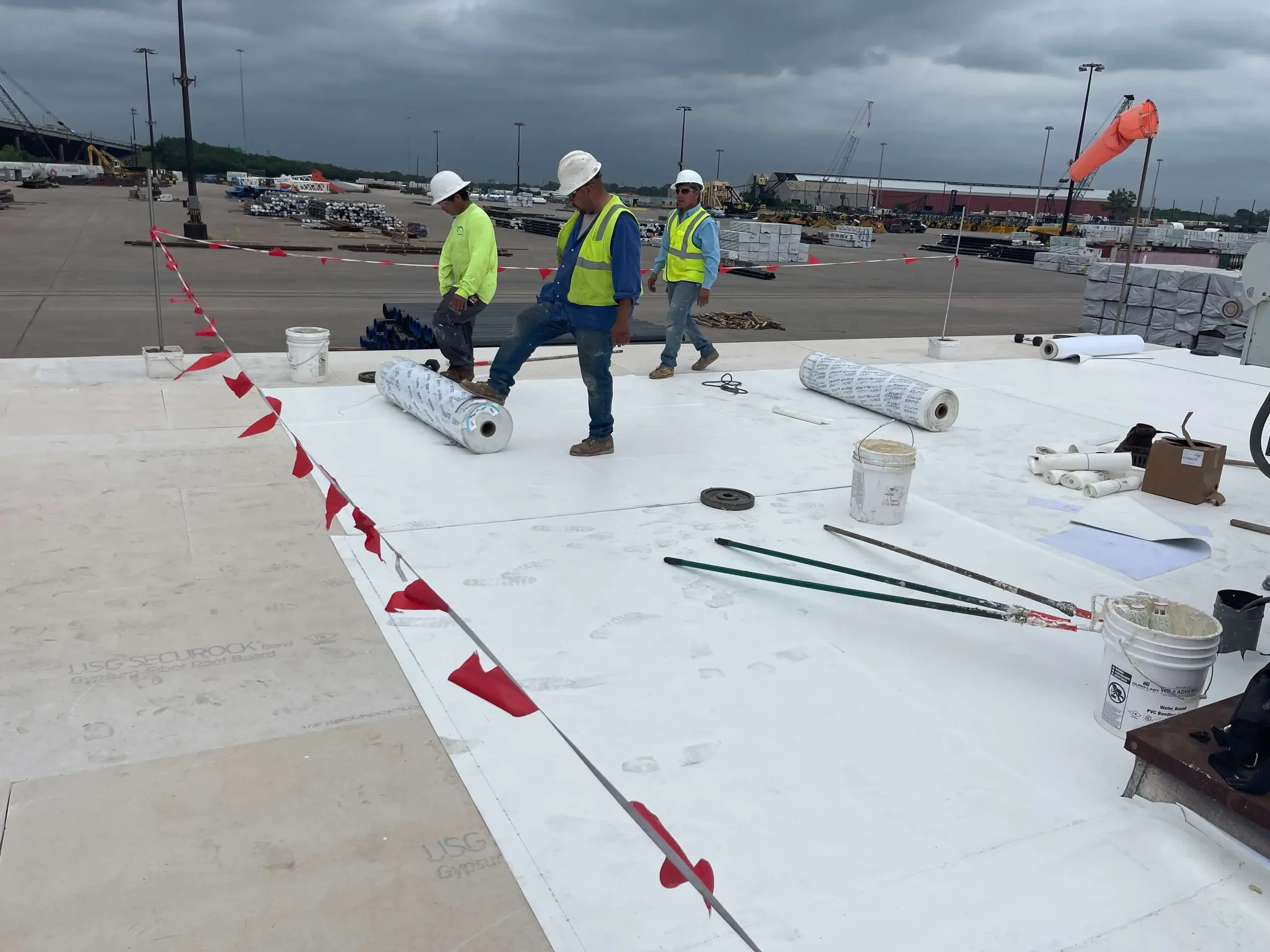
PVC for Kitchen Exhaust and Chemical-Exposed Roofs
Grease, oil, and chemical exposure break down a lot of roofing membranes over time, and PVC is the material we reach for on roofs that see that kind of exposure: hotel and restaurant kitchen exhaust along the retail corridor near Fort Moore, and manufacturing plant roofs where process exhaust or occasional spills reach the roof deck.
Why Chemical Resistance Matters More Here Than People Expect
A kitchen exhaust fan on a hotel or restaurant roof vents grease-laden air directly onto the membrane around it, and TPO and EPDM both degrade faster under sustained grease contact than PVC does. The retail-and-hotel belt that grew up around Fort Moore has a concentration of food service roofs, and we see membrane failure clustered specifically around exhaust fan footprints on buildings using the wrong material for that exposure.
Manufacturing plants present a different version of the same problem. Process exhaust, occasional chemical venting, or rooftop equipment handling solvents can degrade a standard membrane at a rate that has nothing to do with UV or weather. PVC's chemical formulation resists that kind of exposure better than most single-ply alternatives, which is why plant roofs with known exhaust or chemical handling on the roof deck are candidates for PVC even when cost runs higher than TPO.
We see this most clearly on buildings that have replaced a TPO or EPDM membrane once already, sometimes years earlier than the roof's expected service life, because grease or chemical exposure wasn't accounted for at the original spec. That repeat-failure pattern is usually the reason a building owner calls us specifically about PVC rather than defaulting to whatever the last contractor installed.
Heat-Welded Seams Under Georgia Summer Heat
PVC seams weld the same way TPO seams do, with hot air fusing the sheets into a continuous bond, and that bond holds up well under this region's summer heat load. We probe every seam at closeout the same way we do on TPO installs, with particular attention to seams near exhaust fan curbs where grease film can interfere with weld quality if the surface isn't cleaned properly before welding.
Hail resistance on PVC is comparable to TPO, adequate for the storm sizes we typically see, though we still recommend a post-storm inspection after any hail event significant enough to dent vehicles or damage vents nearby. Chemical exposure and hail damage can compound each other, since a membrane already softened by grease contact bruises more easily under impact than a clean membrane would.
Installing Around Hotel and Restaurant Operating Hours
Hotels and restaurants along the corridor near Fort Moore don't close for a roof project, and kitchen exhaust equipment often can't be shut down during business hours without shutting down food service. Before we schedule work near an active kitchen exhaust system, we plan the sequence around service hours:
- Working exhaust curb flashing during off-peak service windows
- Coordinating with kitchen staff before any exhaust fan gets temporarily disconnected
- Staging material away from guest parking and hotel entrances
- Scheduling noisier work like welding and equipment moves outside guest-facing hours
- Keeping a plan for temporary exhaust routing if equipment must come offline briefly
That level of coordination takes more planning up front than a straightforward warehouse reroof, but it's what keeps a hotel's kitchen running through the project.
Detailing Around Exhaust Fans and Chemical Vents
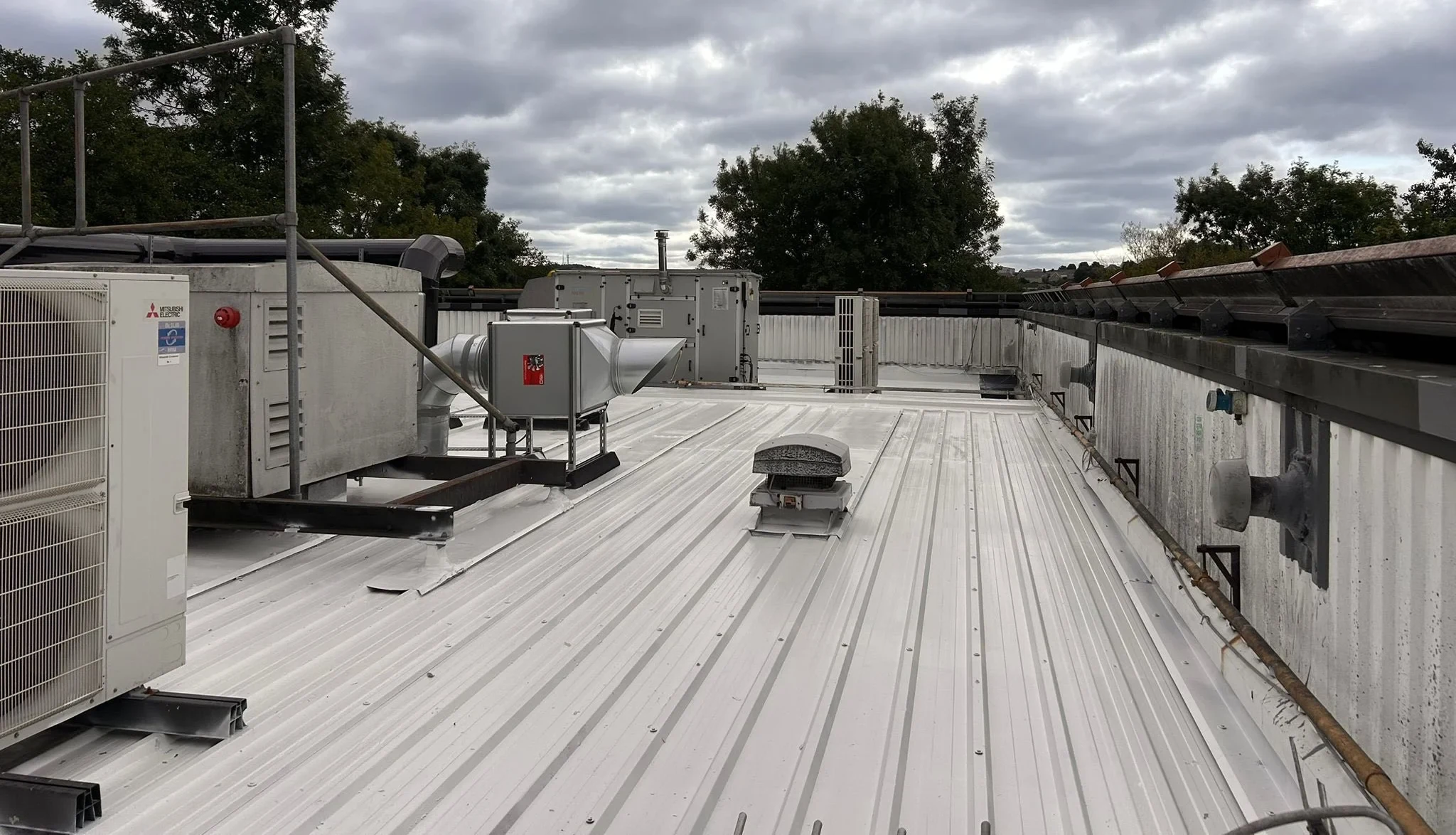
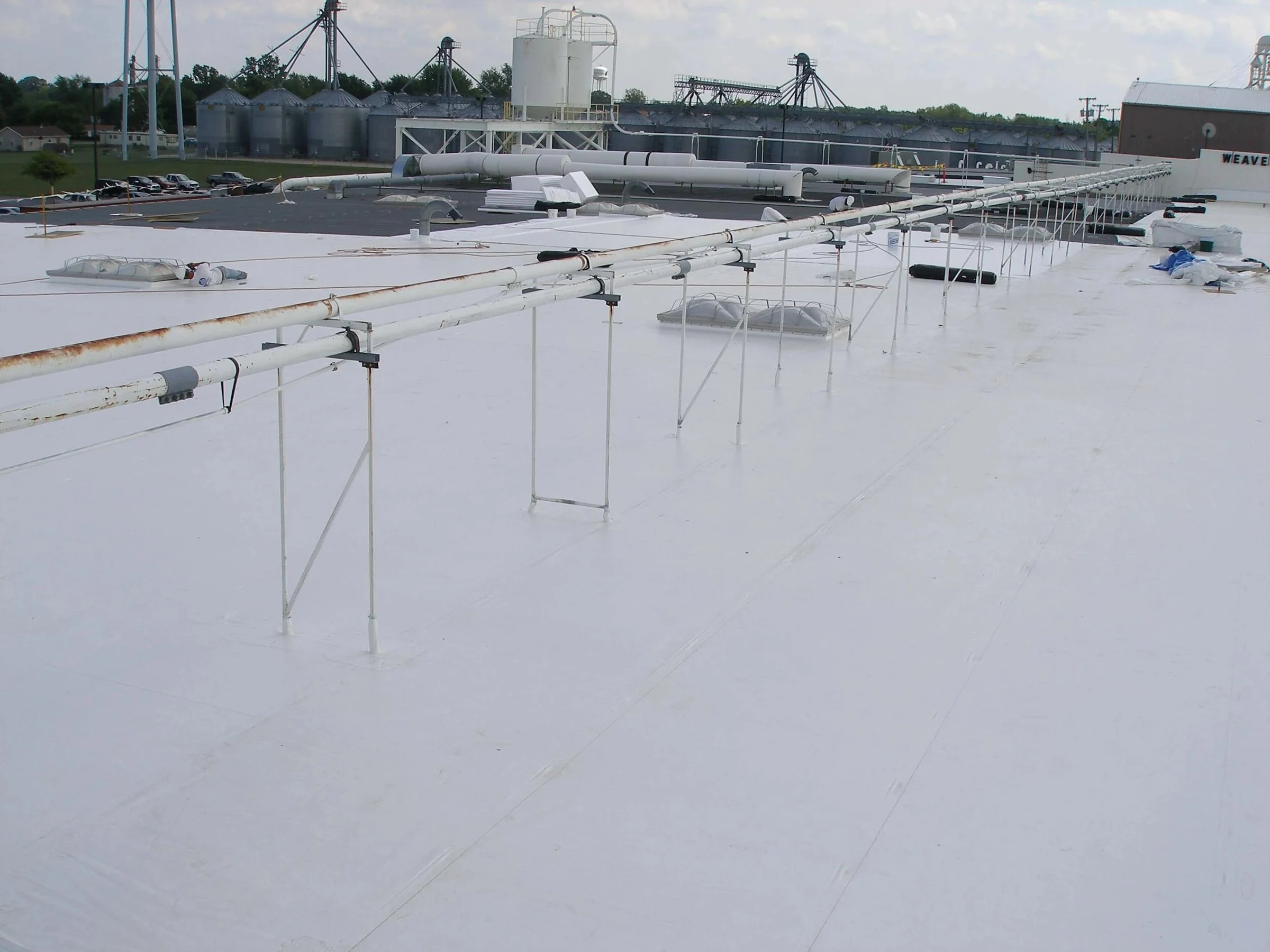
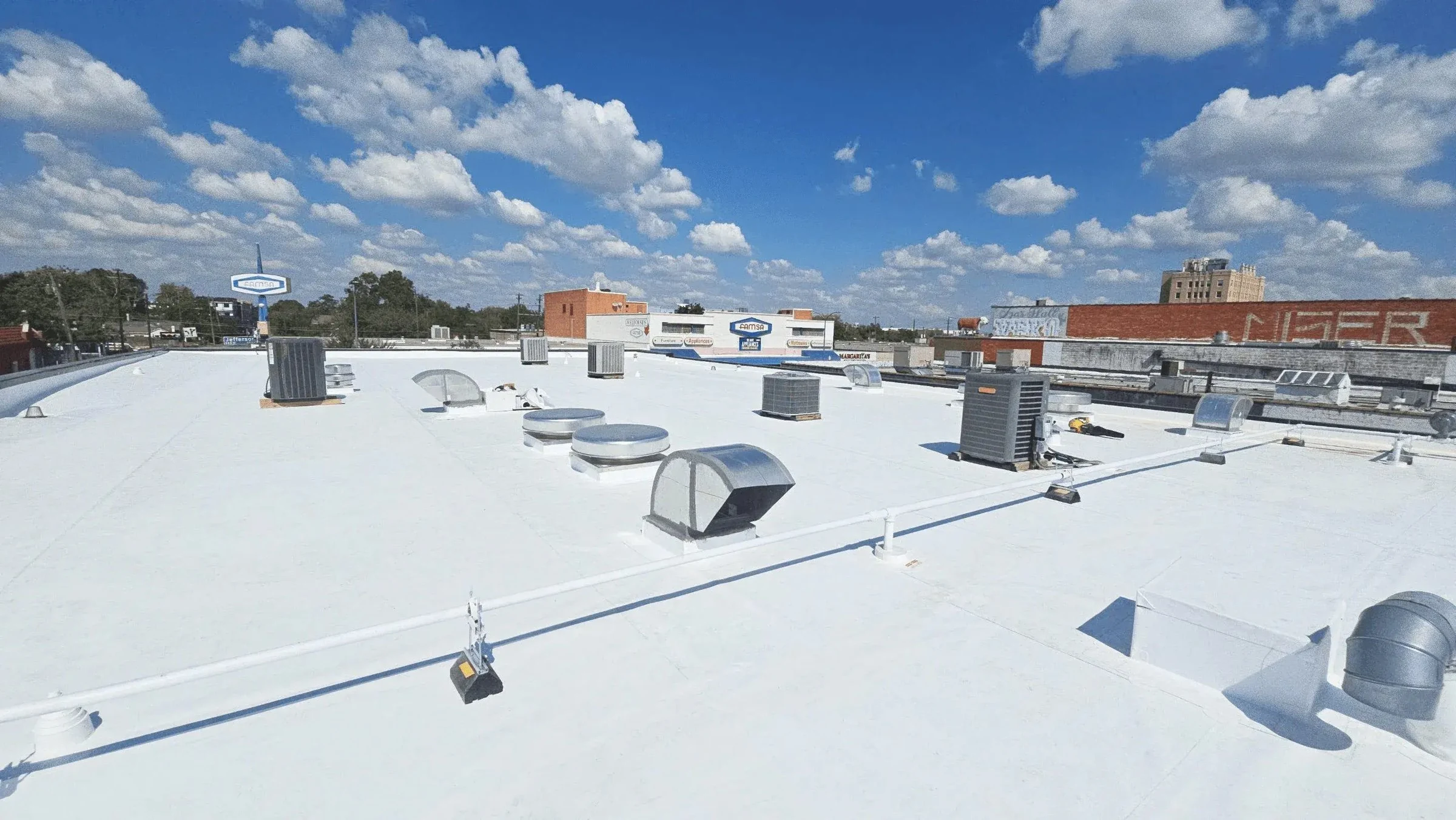
The failure points on a chemical- or grease-exposed roof are almost always at penetrations rather than the open field. We detail exhaust fan curbs, chemical vent stacks, and any equipment pad with extra membrane reinforcement and mechanical attachment, since adhesive alone under sustained chemical exposure doesn't hold as reliably as it does on a clean roof field.
We also pay attention to how exhaust fan grease drains off the roof rather than pooling. On a poorly detailed roof, grease residue collects in low spots near the fan curb and gradually breaks down whatever membrane sits underneath it, which is a slower and less obvious failure mode than a storm-driven leak but just as costly to fix once it's spread across a wide area.
Common Questions About PVC on Kitchen and Plant Roofs
Why not use TPO on every roof instead?
TPO works well on most roofs, but it degrades faster than PVC under sustained grease or chemical exposure. We recommend PVC specifically where kitchen exhaust or plant chemical venting reaches the roof deck.
Can you install PVC without shutting down our kitchen exhaust system?
In most cases, yes. We sequence exhaust curb work around service hours and coordinate directly with kitchen staff before any equipment needs to come offline, even briefly.
How does PVC handle our summer heat?
PVC's heat-welded seams and formulation hold up well under sustained Georgia summer heat load, comparable to or better than other single-ply membranes in that regard.
Is PVC more expensive than TPO?
Generally yes, but on a roof with real chemical or grease exposure the added service life usually justifies the cost difference over a standard membrane that would need earlier replacement.
Do you inspect exhaust fan curbs separately from the rest of the roof?
Yes. Exhaust curbs and chemical vents are where failures concentrate on these roofs, so they get closer attention on every inspection than the open membrane field. We photograph and log condition at each one over time so a slow decline shows up in the record before it becomes an active leak.
Ready to review the roof scope?