Commercial Roofing Services
Commercial Roof Inspections & Reports in Columbus, GA
A Roof Walk That Tells You What to Budget For This Year
The inspection records membrane, seams, flashings, drains, penetrations, edge metal, moisture indicators, photographs, and practical next steps in a condition report. An inspection should tell an owner what needs attention this year versus what can wait, ranked by real urgency. We walk the full roof field, check drainage and flashing, and hand over a written report instead of a verbal impression that leaves the actual condition open to interpretation.
What We Check on Every Walk
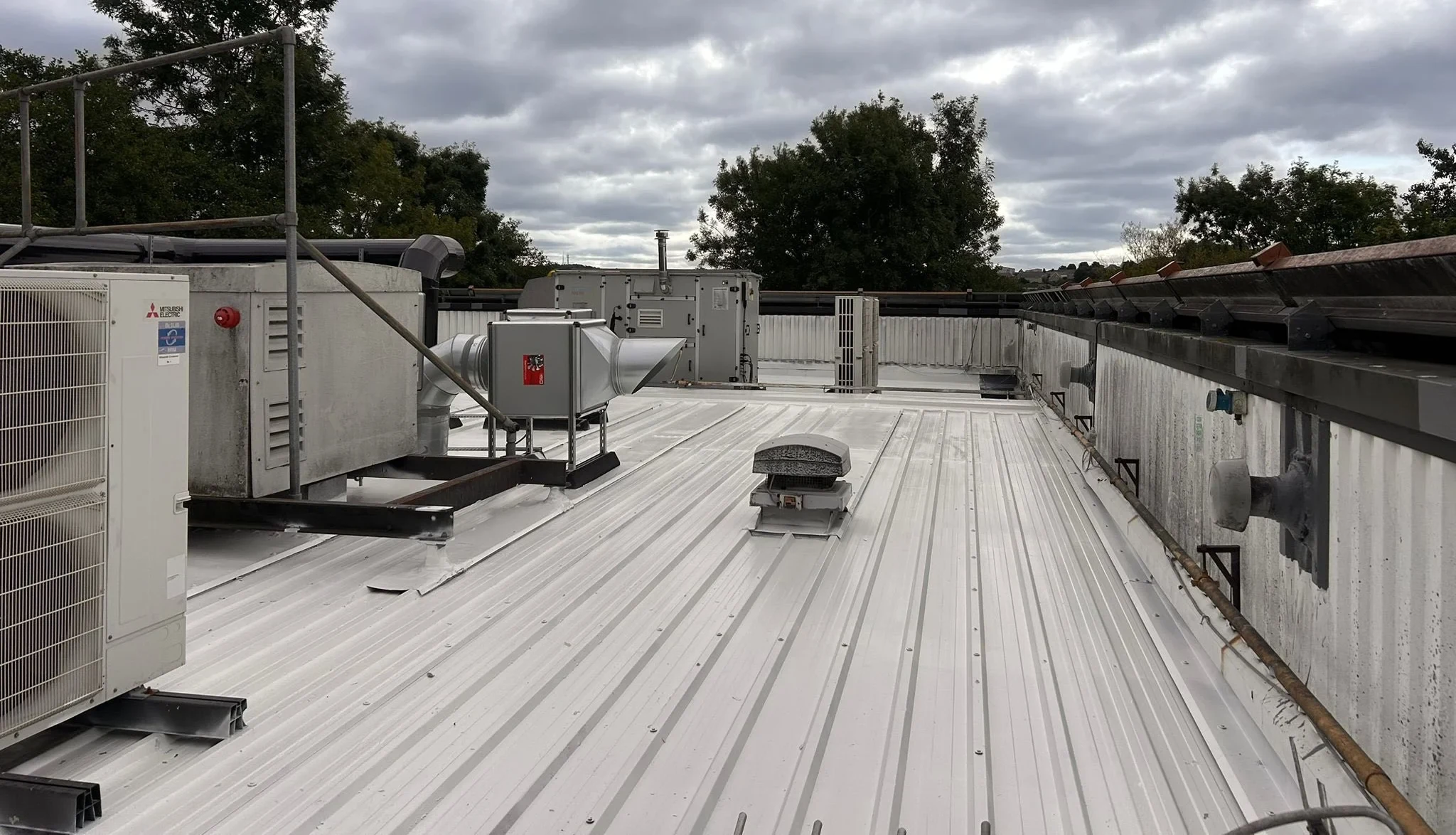
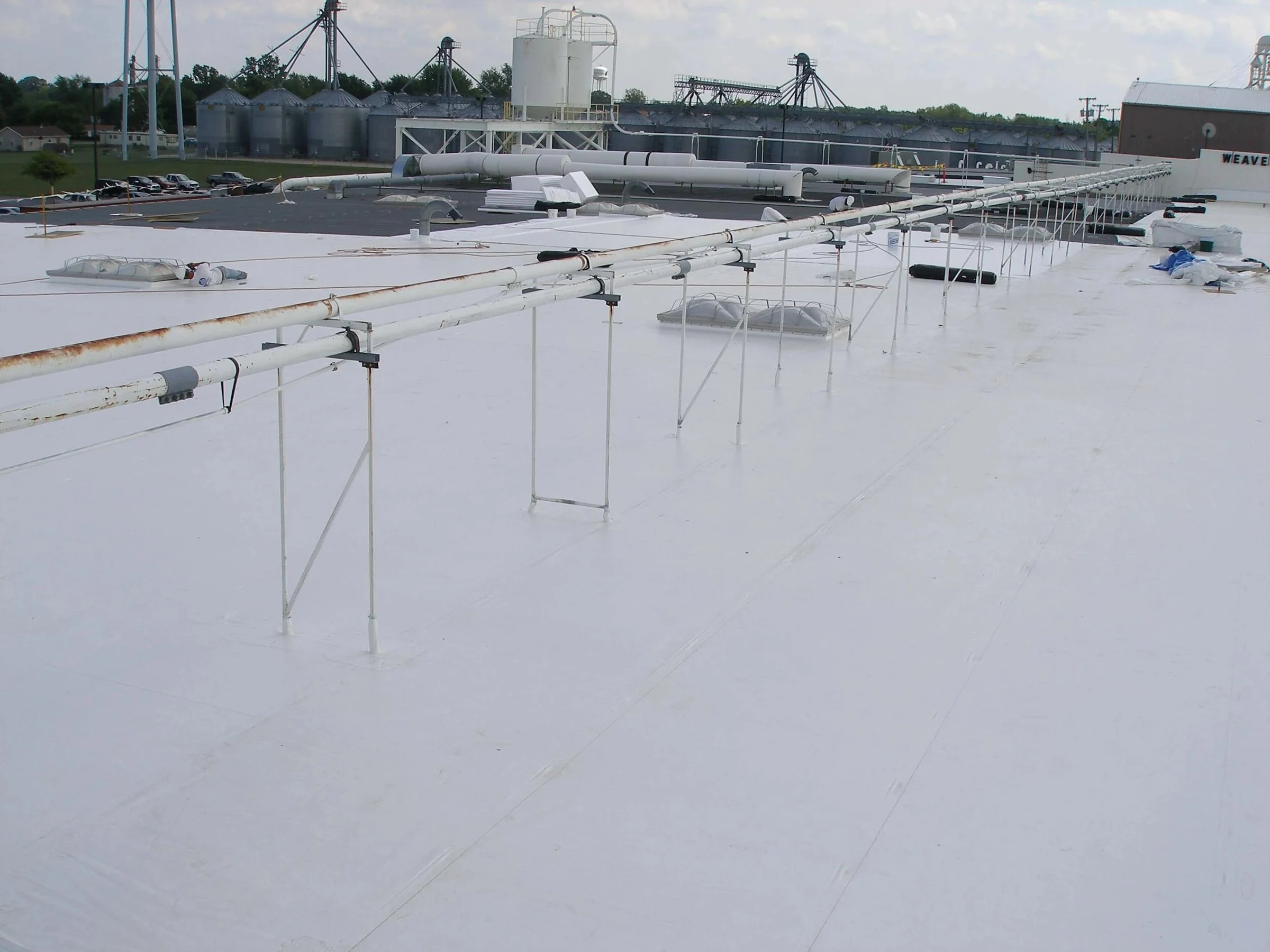
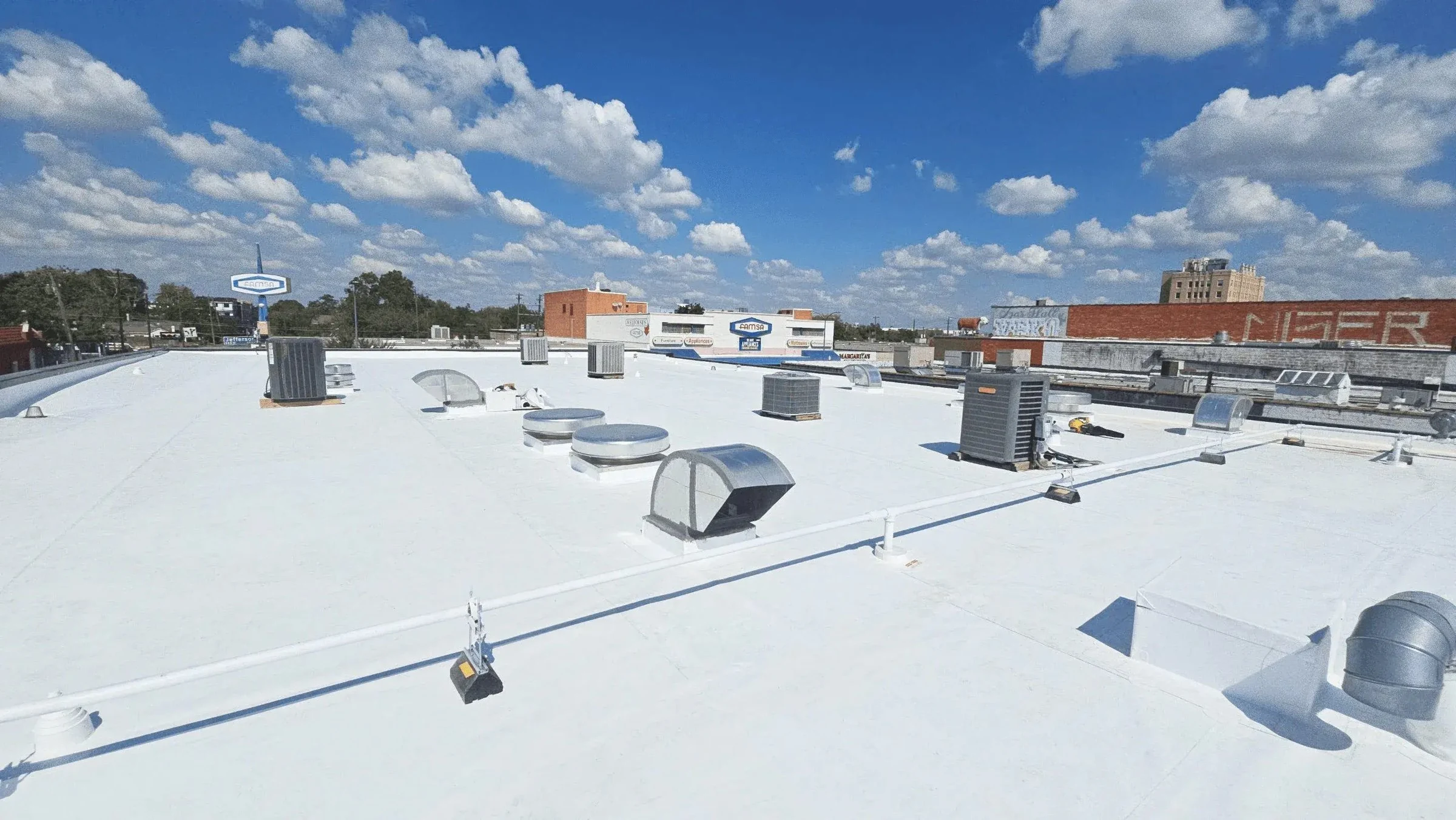
Membrane condition gets checked for seam separation, blistering, ponding evidence, and UV degradation, which shows up faster on Columbus roofs than in milder climates because of the combination of summer heat and humidity. Flashing at parapets, curbs, and penetrations gets the same attention, since that is where most failures actually start.
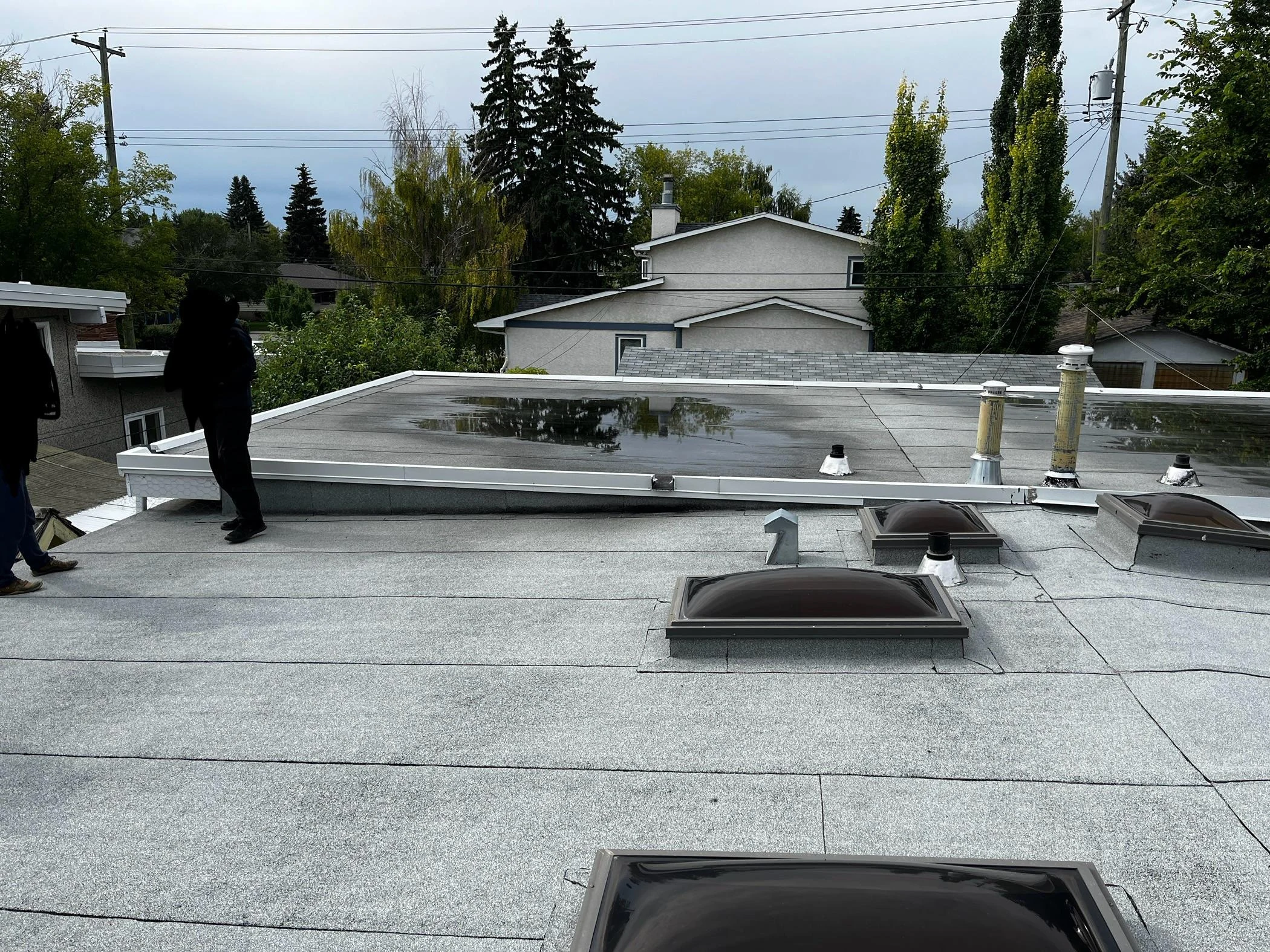
Drainage is a separate line item on our report. Clogged scuppers, undersized drains, and ponding areas get measured and photographed, because standing water is the single biggest driver of premature membrane failure on flat roofs in this climate.
We also note rooftop access conditions, ladder and hatch safety, and any fall-protection gaps, since those items matter for crew safety on every future visit and are worth flagging to an owner even when they are not a roofing defect in themselves.
Timing Inspections Around Georgia Storm Season
We recommend a spring inspection ahead of thunderstorm and hail season and a fall check before winter, which gives owners a clear before-and-after read on storm impact rather than guessing whether damage happened this year or built up over several seasons.
For buildings that carry insurance policies with storm deductibles, a documented spring baseline makes a real difference if a hail or wind claim comes up later in the year, since it separates new storm damage from pre-existing wear in a way an adjuster can actually verify.
How We Rank Findings by Urgency
Every item on the report gets a priority tag: immediate, this budget cycle, or monitor. A lifted flashing edge that could let wind-driven rain in during the next storm gets flagged immediate, while minor granule loss on an otherwise sound membrane gets flagged monitor with a note on when to recheck it.
This ranking is what property managers and CFOs actually need for capital planning, rather than a report that treats every finding as equally urgent and forces someone without a roofing background to guess at priority.
- Membrane surface checked for seams, blistering, and UV wear
- Flashing inspected at every parapet, curb, and penetration
- Drains and scuppers checked for clogs and ponding evidence
- Rooftop equipment curbs and condensate lines reviewed
- Findings tagged immediate, this budget cycle, or monitor
- Photo-tied report keyed to a diagram of your roof
- Recommended recheck timeline for anything flagged to monitor
Inspections That Fit Around Your Building's Use
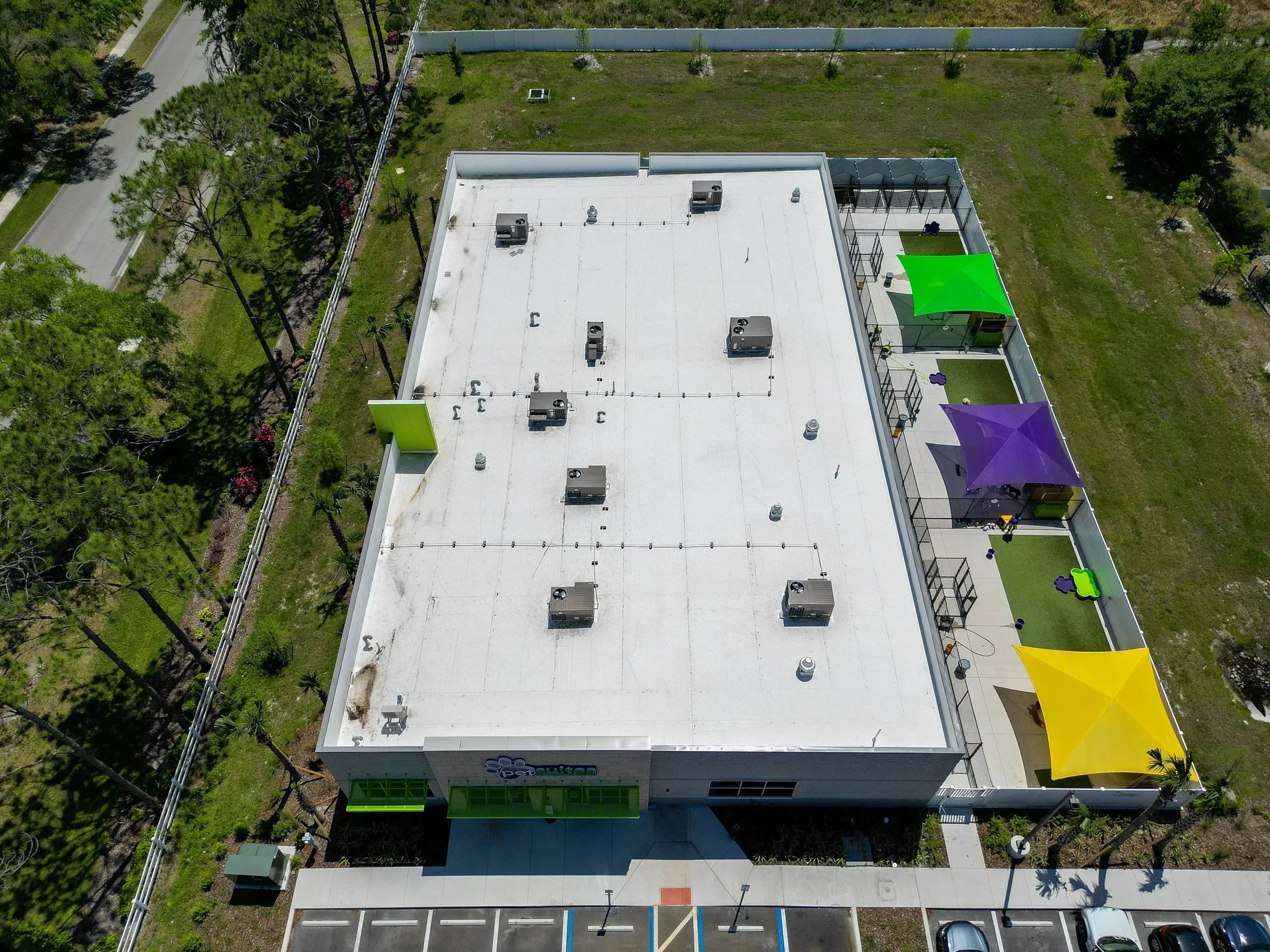
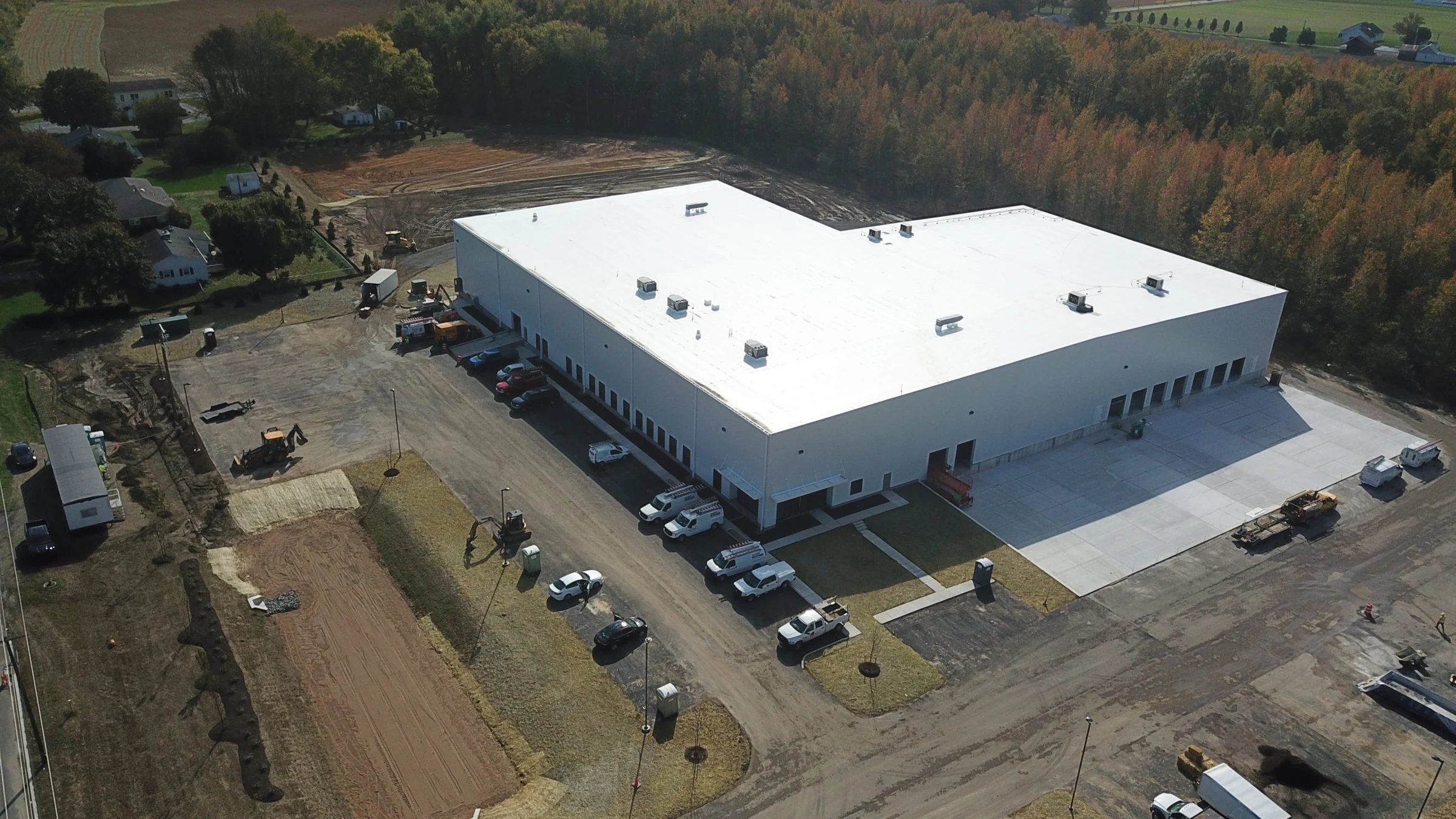
Manufacturing and distribution buildings near the industrial parks off Airport Thruway get scheduled around shift changes so ladder and roof-hatch access does not interfere with floor operations. Office and retail buildings near Manchester Expressway get scheduled outside peak customer hours.
We can also coordinate inspections around tenant lease turnovers or property sale due diligence, giving a buyer or seller a documented condition report rather than a rough estimate.
What You Get When It's Done
The final report includes photos tied to a roof diagram, priority tags for every finding, and a plain-language summary an owner can hand to a property manager or lender without translation. We are glad to walk through it in person if that is more useful than reading it cold.
Inspecting Portfolios Across Multiple Buildings
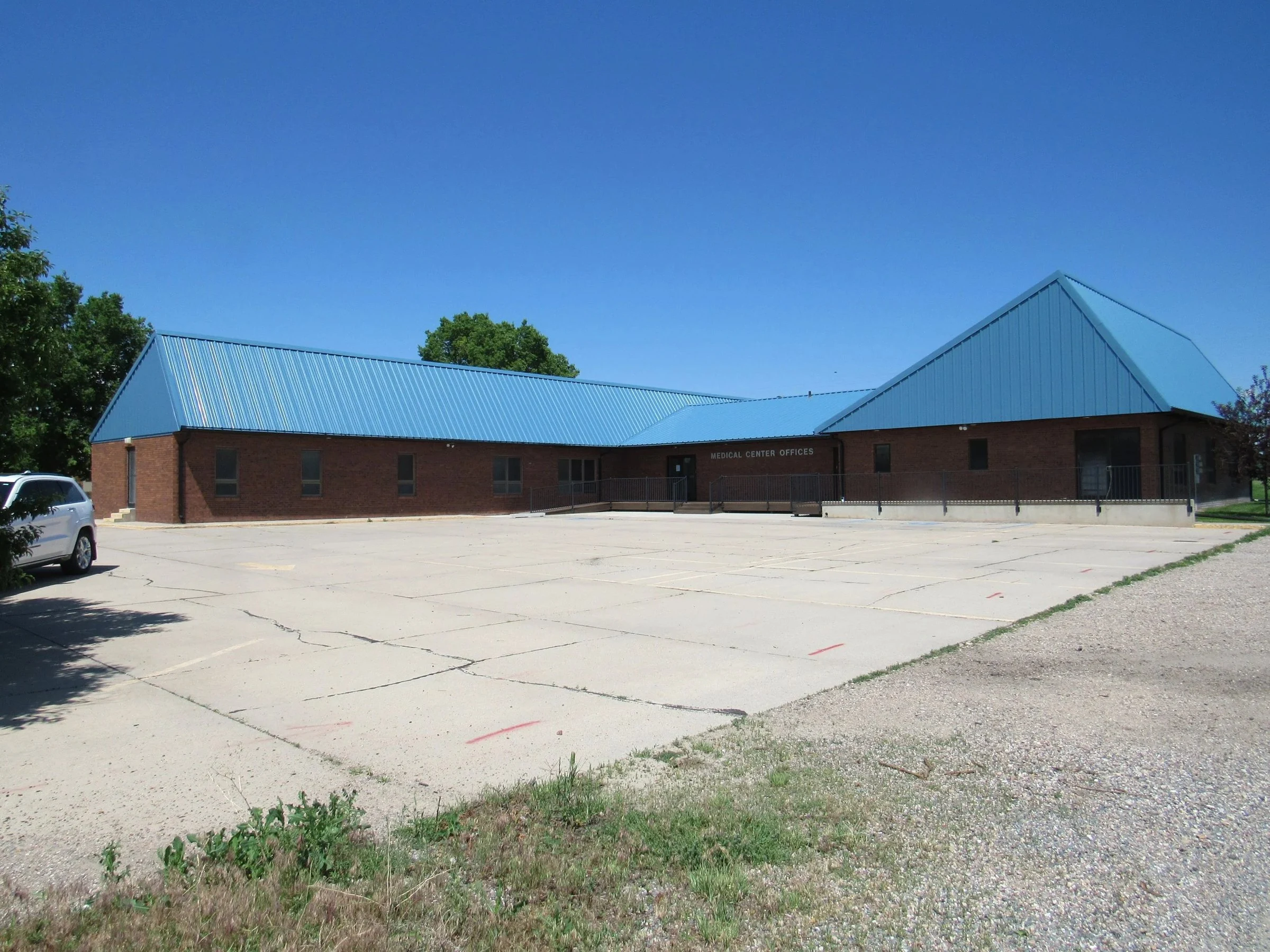
Property managers overseeing several sites across the Columbus metro, from a distribution building off Airport Thruway to a medical office near the hospital campuses, get a consistent report format across every roof, which makes comparing condition and setting capital priorities across the portfolio much easier than a stack of differently formatted reports from different vendors over the years.
We also track findings year over year on repeat clients, so a spring inspection can note whether last fall's monitor item has progressed, holding steady, or needs to move up in priority for the next budget cycle.
Inspection Questions Property Managers Ask
How often should a commercial roof be inspected in Columbus?
Twice a year is our standard recommendation, once in spring ahead of storm season and once in fall, though buildings with older membranes or known trouble spots sometimes warrant a mid-summer check as well.
Does an inspection interfere with our building operations?
We schedule around your shift changes and business hours whenever possible, and the walk itself typically takes a few hours depending on roof size, with no interior disruption unless a leak requires us to check a ceiling access point.
What does the written report actually include?
Photos tied to a roof diagram, a priority tag for every finding, drainage and flashing notes, and a plain-language summary you can hand to ownership or a lender without needing us to translate it.
Can an inspection help with an insurance claim after a storm?
A documented baseline from before a storm makes the difference clearer when filing a claim afterward. We recommend scheduling inspections on a predictable seasonal cycle for exactly this reason.
Do you inspect roofs during a property sale or lease turnover?
Yes, we do these regularly for buyers, sellers, and incoming tenants who want a documented condition report rather than relying on the seller's or prior tenant's word, and we can turn the report around quickly enough to fit inside a typical due diligence window.
Ready to review the roof scope?