Roof Systems
TPO 60 Mil Roofing in Columbus, GA
60-Mil TPO Membrane on Columbus Roofs
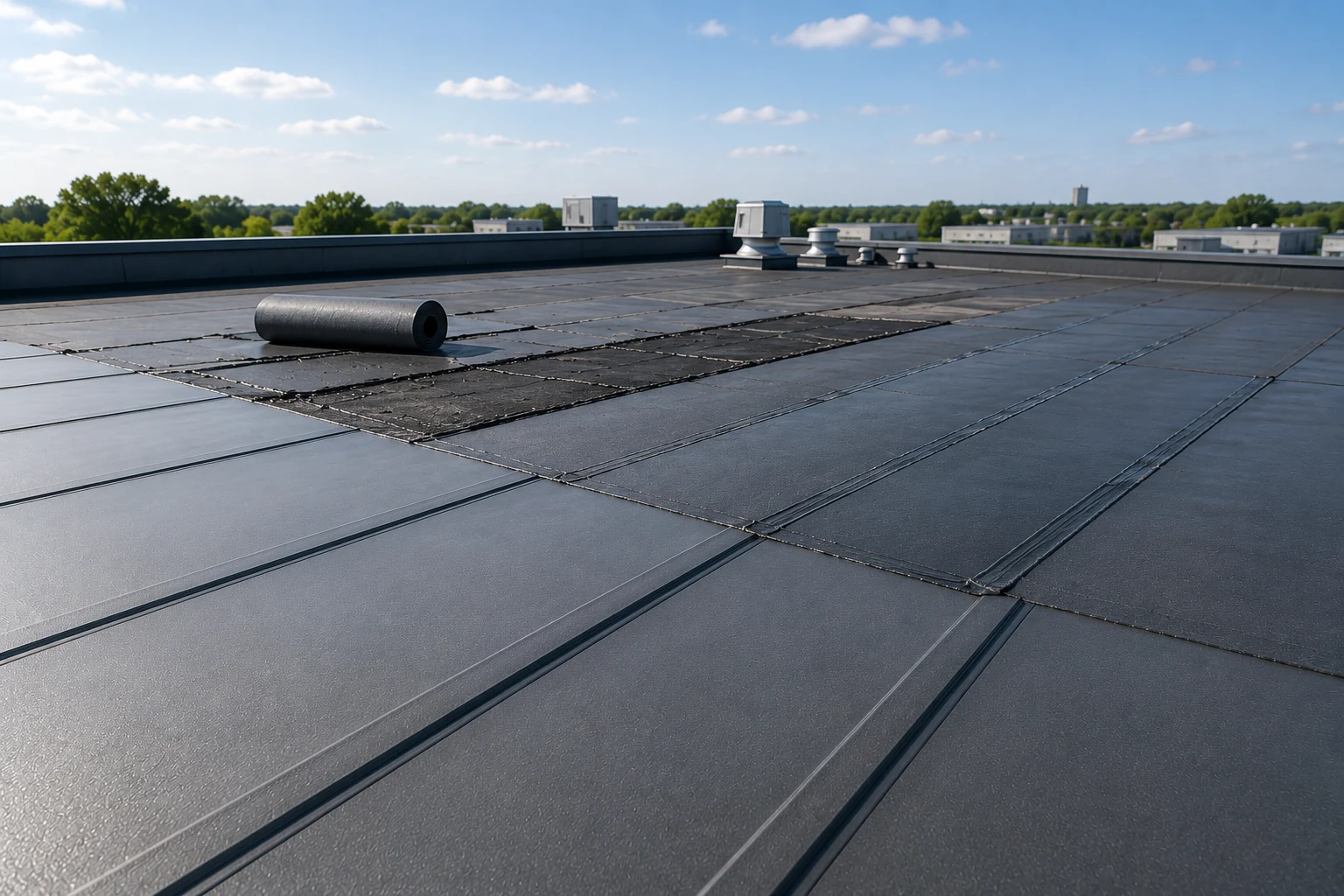
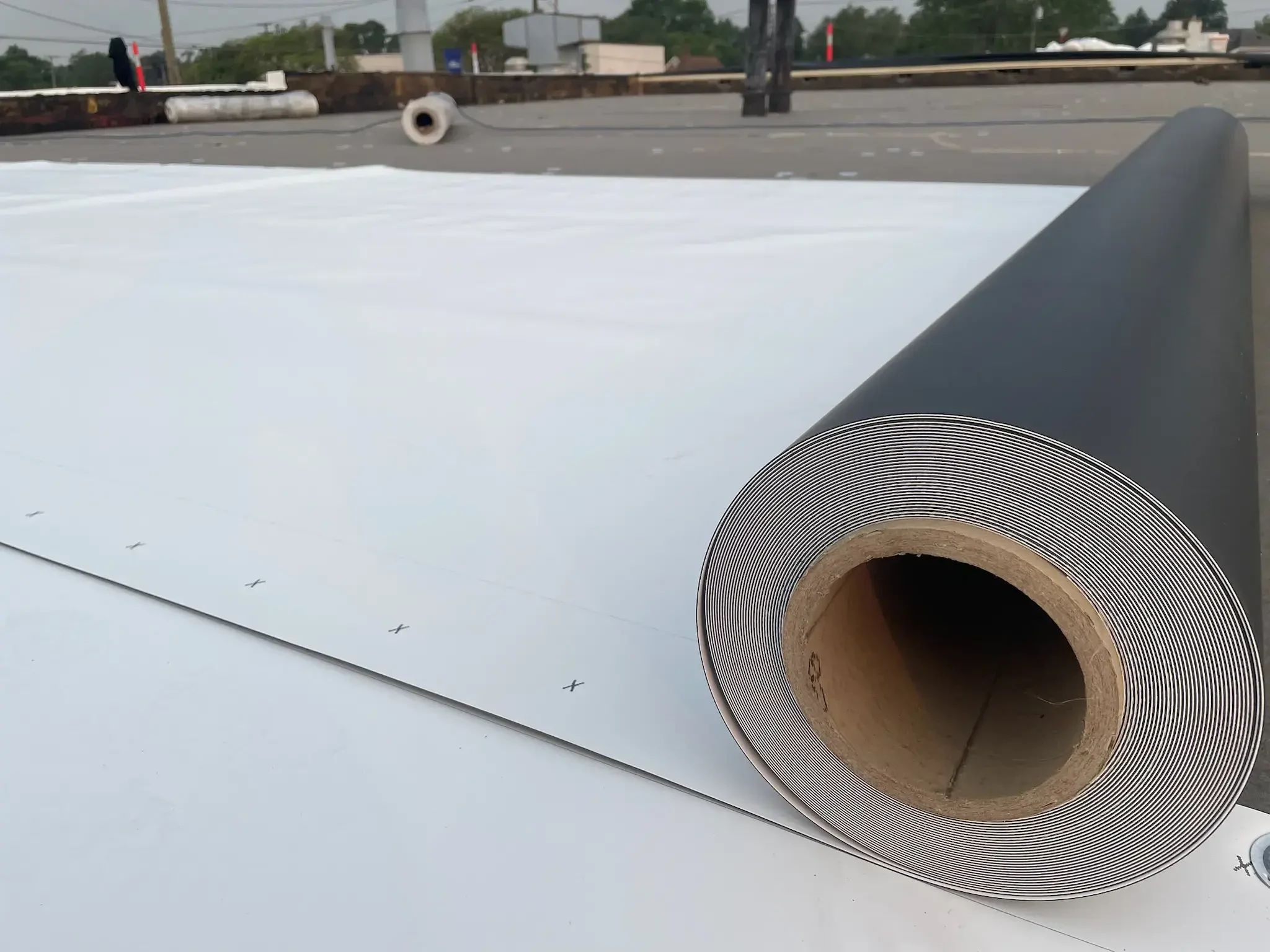
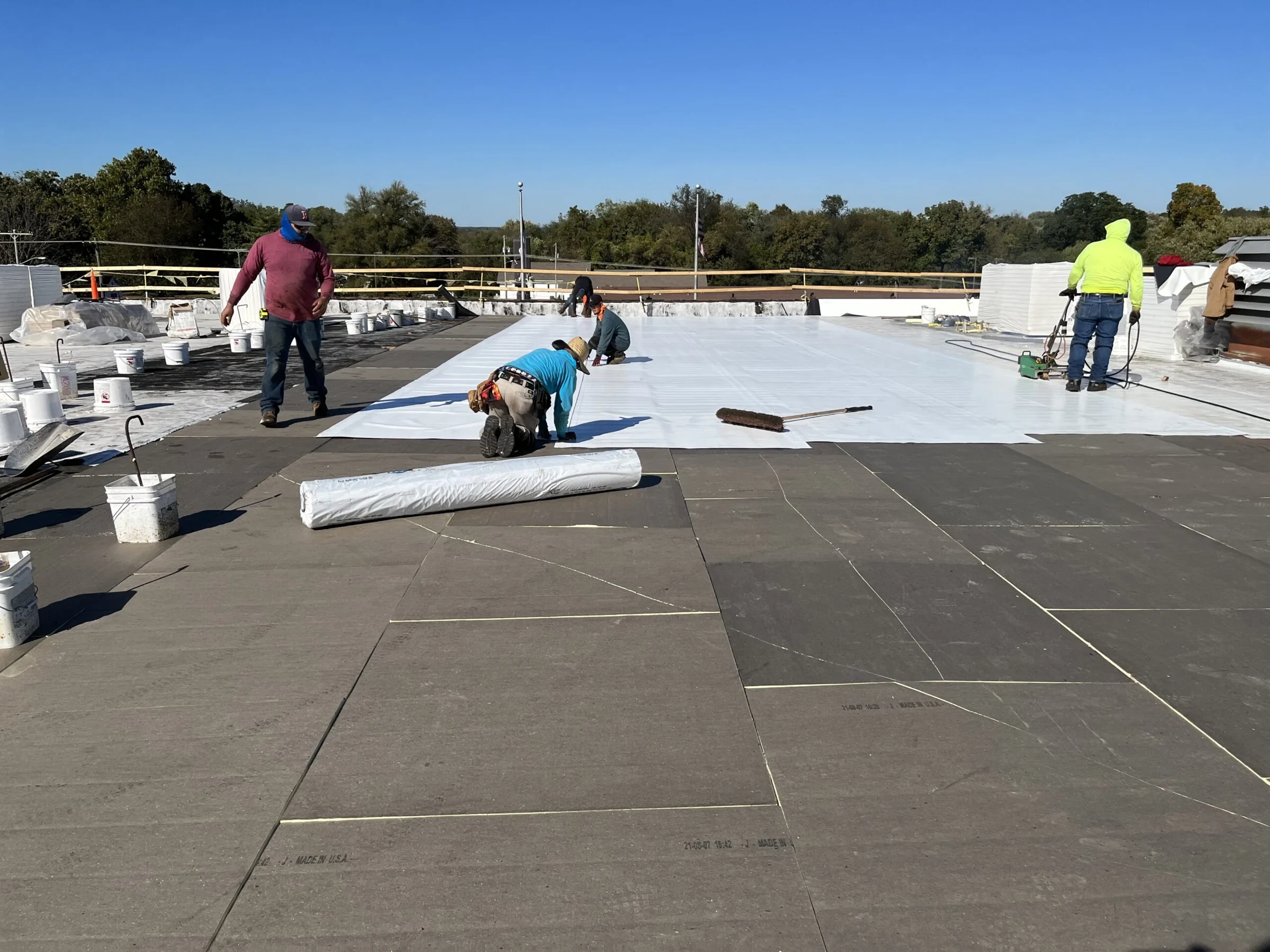
Sixty-mil TPO is the volume spec we run across Columbus warehouses, retail boxes, and office roofs, because it clears the wind and hail exposure this market throws at a flat roof without pushing the budget into 80-mil territory. It is a hot-air-welded single-ply system, and the weld quality at every seam is what separates a roof that runs quiet for two decades from one that starts weeping at the laps in year four.
What 60 Mil Actually Buys You
At 60 mil, the membrane carries enough top-ply thickness above the reinforcing scrim to take rooftop foot traffic during HVAC service calls without the scrim showing through early. That top layer is also the sacrificial layer against ultraviolet exposure, so the extra mils compared to a 45-mil product translate directly into years of weathering capacity before the membrane chalks and the seams start to lose flexibility.
We do not treat 60 mil as a default we skip past. On buildings with unusually heavy rooftop unit traffic, we walk the client through 80-mil pricing instead. But for the typical single-story distribution building off Macon Road or a strip retail roof near Peachtree Mall, 60-mil TPO covers the wind uplift and warranty requirements without paying for thickness the building will never use.
Heat Load Across a Georgia Summer Roof
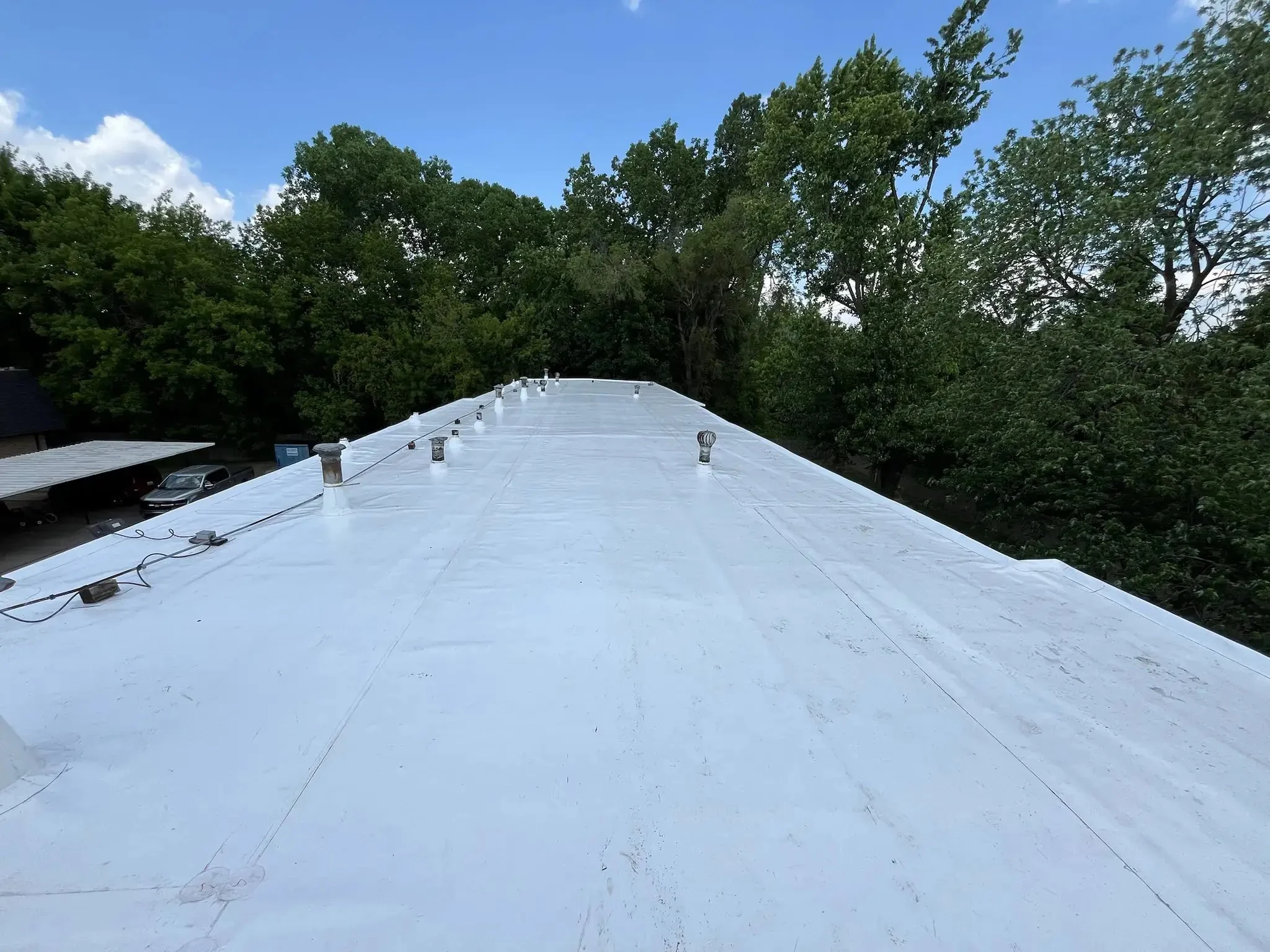
Columbus runs long stretches of high-humidity, high-UV summer weather, and a dark roof surface here can run considerably hotter than the ambient air temperature by mid-afternoon. White TPO reflects most of that solar load back off the building instead of driving it into the insulation board, which keeps the insulation and the adhesive layers beneath the membrane aging slower over the life of the roof.
That reflectivity does more than reduce an energy line item. A membrane that runs cooler ages more slowly at the molecular level, so the plasticizers and seam bond that keep a TPO sheet flexible hold up longer under a Columbus summer than they would under a dark, heat-soaked surface. We factor that into the warranty term we recommend for a given building.
Wind Uplift Around Dock Doors and Roof Edge
Warehouse and distribution roofs in this market are full of dock doors, and the wind pattern around a loading bay wall changes the uplift pressure at the adjacent roof edge. We calculate the fastening pattern to the building's actual wind-uplift design, tightening the screw and plate density at corners, perimeters, and anywhere a dock canopy or high parapet changes the local wind behavior, rather than running one fastening pattern across the whole field.
Mechanically attached is our standard attachment method for 60-mil TPO on a sound steel or concrete deck. We move to fully adhered when the deck will not reliably hold fasteners or when the uplift calculation for a taller building pushes the spec that direction.
Hail Impact and Seam Integrity
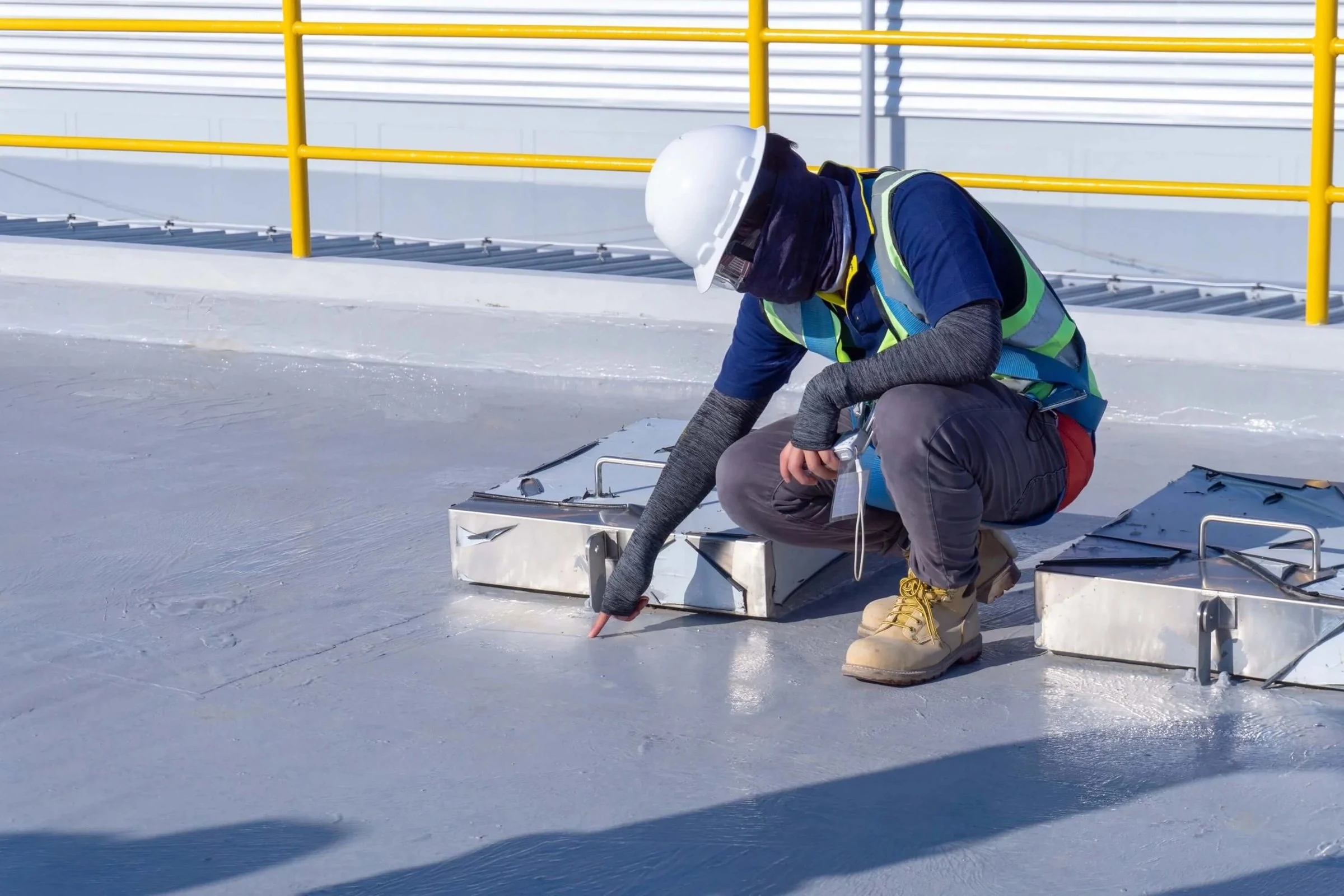
Severe thunderstorm cells that move through the Chattahoochee Valley in spring and early summer can carry hail large enough to bruise a membrane laid over soft insulation. We pair 60-mil TPO with a high-density cover board so impact energy spreads across the board instead of punching a dent straight through to the deck, and we probe every field and flashing seam before closeout so a hail event does not find a weak weld to exploit.
Rain Volume From Tropical System Remnants
Columbus sits far enough inland that a landfalling Gulf hurricane usually reaches us as a tropical remnant, but those systems can still drop a full season's worth of rain across two or three days. A welded TPO seam is what keeps that volume of water out of the building, and we oversize drainage detailing at scuppers and roof drains specifically because a slow-draining roof under a tropical rain band is a ponding and leak risk regardless of how good the membrane itself is.
- Single-story distribution and manufacturing buildings
- Big-box and strip retail roofs
- Medical office and outpatient buildings
- Multi-tenant office parks
- Government and institutional facilities
Questions Columbus Building Owners Ask About 60-Mil TPO
Is 60-mil TPO thick enough for a Columbus roof, or should we spec 80-mil?
Sixty mil is our standard spec for typical single-story buildings with routine HVAC service traffic. We move to 80-mil when a building carries heavier rooftop equipment loads or when the owner wants extra weathering headroom for a longer hold period.
How does mechanically attached TPO handle wind near loading docks?
We calculate fastening density against the building's actual wind-uplift requirement and tighten the pattern at corners, edges, and anywhere a dock canopy changes local wind behavior, rather than using one uniform pattern across the field.
Does white TPO really help with our summer cooling costs?
A reflective white membrane keeps the roof surface and the insulation beneath it cooler through a Columbus summer, which reduces roof-driven heat load into the building. The dollar savings depend on your insulation and HVAC, so we do not quote a specific figure, but the membrane also ages more slowly running cooler.
What stops hail from denting our new TPO roof?
The membrane rarely fails on its own. We pair the TPO with a high-density cover board so hail impact energy spreads across the board instead of concentrating on one spot, and we document that assembly for the insurance conversation before a storm ever hits.
How does the roof handle heavy rain from a tropical storm remnant moving through Georgia?
The welded membrane keeps water out at the seams, but drainage capacity is what actually clears the volume. We size scuppers and drains for sustained heavy rain well beyond a typical afternoon thunderstorm, so the roof does not pond during a multi-day rain event.
Sequencing the Tear-Off to Keep the Building Running
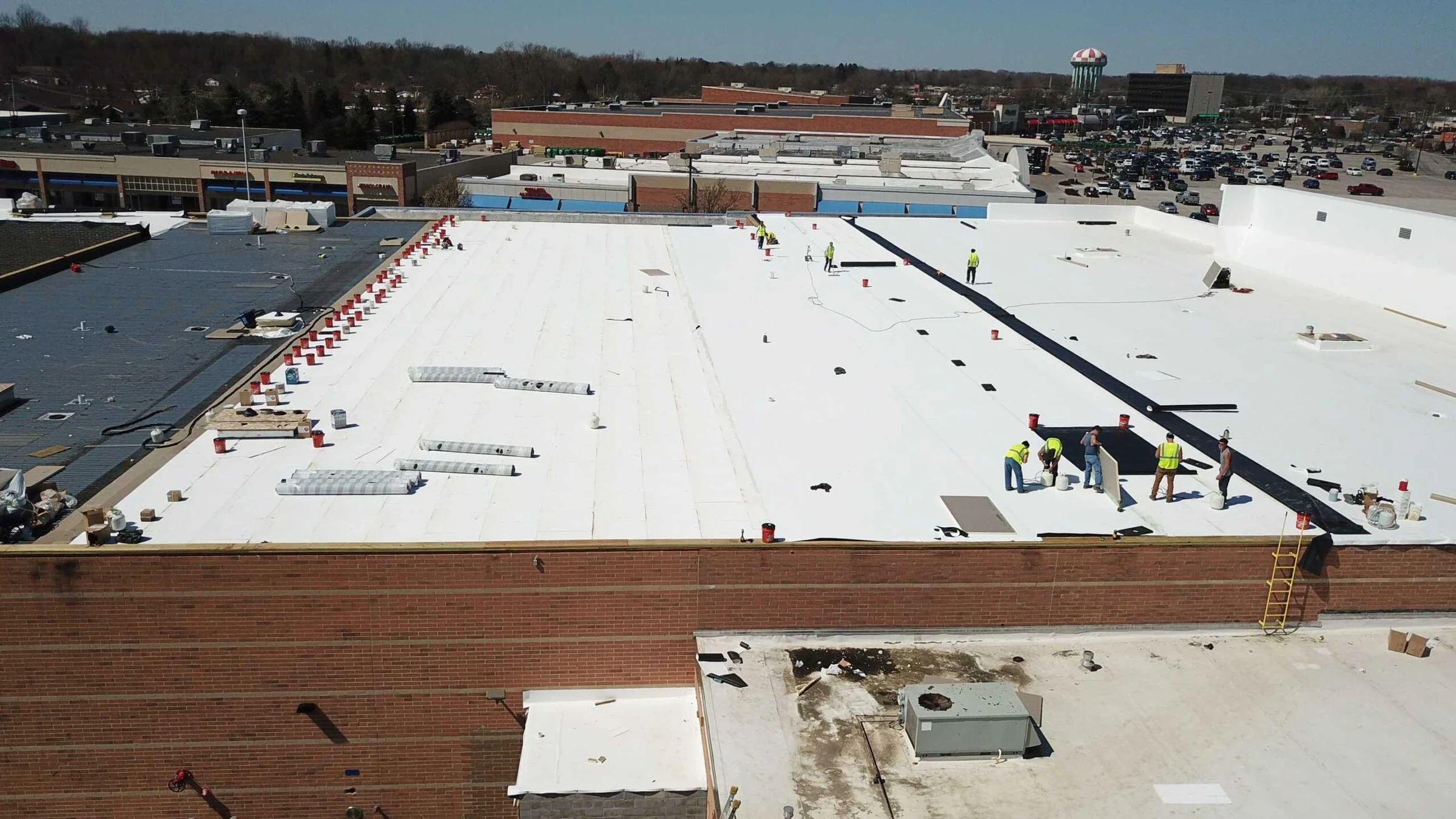
A distribution building with active dock doors cannot go dark for a week while the roof comes off. We stage tear-off in sections, sized to what we can dry-in before an afternoon storm cell builds, and we schedule dock-adjacent sections around the client's shipping windows rather than working the whole field at once. That keeps loading operations moving underneath us instead of shutting the building down for the length of the project.
We also sequence material staging so pallets of insulation and membrane rolls sit clear of active dock lanes, and we walk the loading schedule with the facility manager before mobilization so neither crew nor freight traffic loses time waiting on the other.
Ready to review the roof scope?