Commercial Roofing Services
Silicone Roof Coatings in Columbus, GA
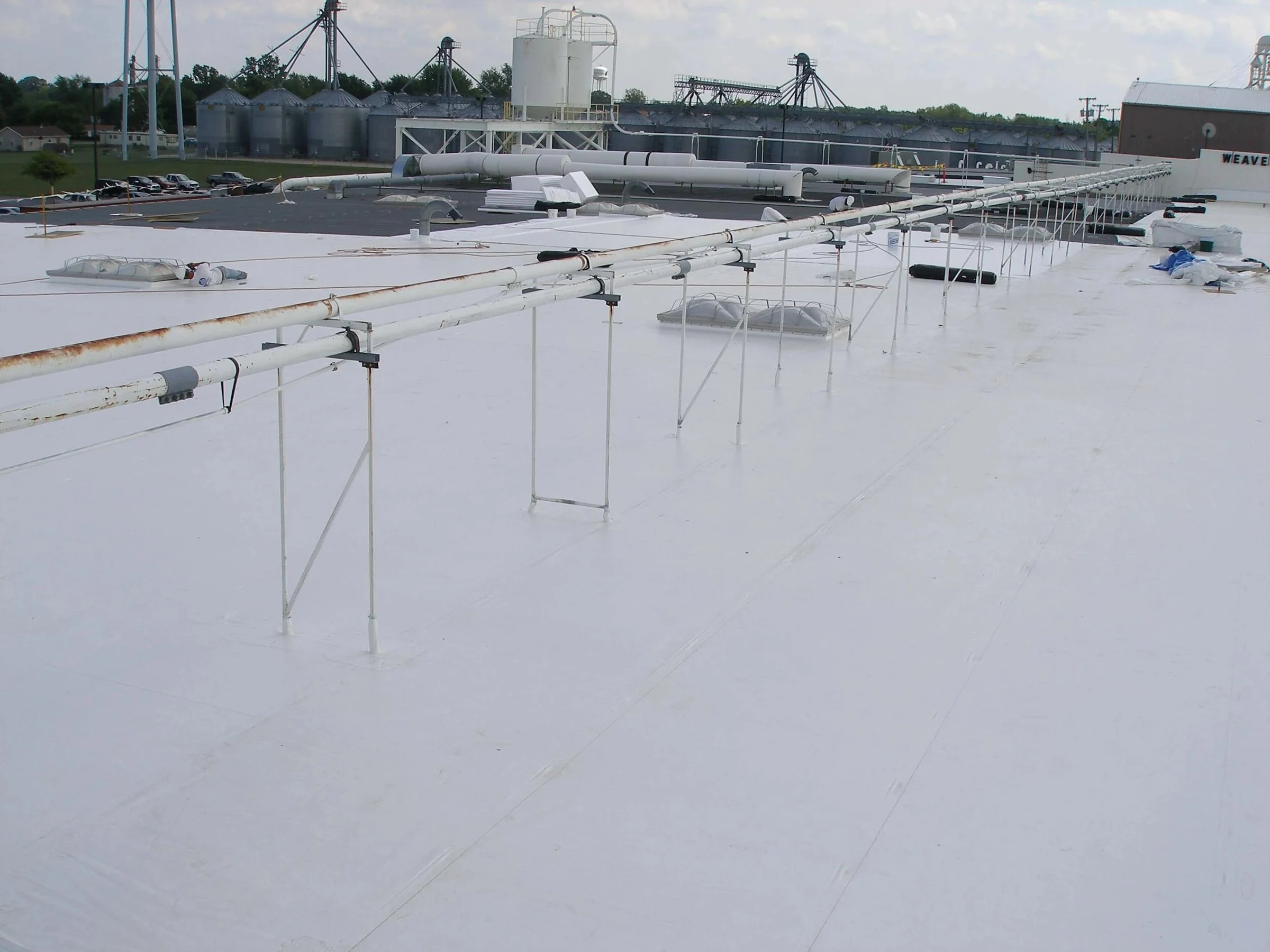
Silicone Coatings to Stop Ponding Without a Tear-Off
Ponding water is the most common reason we get called out to a flat commercial roof in this market, and silicone coating is often the answer that solves it without pulling the building's operation into a full tear-off and replacement project. Silicone's resistance to standing water sets it apart from most other coating chemistries, which matters given how much rain this region gets in a short window during a heavy thunderstorm or tropical system remnant.
Why Ponding Is a Persistent Problem Here
Flat and low-slope roofs on dock-heavy distribution buildings and older institutional structures often have drainage that was adequate when installed but has since been compromised by structural settling, added rooftop equipment changing water flow, or drains that clog faster than they used to. When a heavy rain event drops several inches in an hour or two, which happens here during summer thunderstorms and occasionally during tropical remnant systems, marginal drainage becomes standing water that can sit for days.
Standing water degrades most membranes over time, whether through UV magnification, algae growth, or simply extended saturation at seams and laps. A coating that can tolerate that exposure without breaking down extends the roof's service life in a way that a coating rated only for occasional moisture cannot.
We see this pattern most on buildings where an addition or a later rooftop equipment install changed the original drainage design without anyone reworking the slope or adding a drain. That kind of incidental ponding is common enough in this market that we treat drainage mapping as a standard part of every roof evaluation, not an extra step reserved for roofs with an obvious history of leaks.
Why Silicone Handles Ponding Better Than Other Coatings
Silicone's chemical structure resists hydrolysis, meaning prolonged water contact doesn't break down the coating the way it can with acrylic or some urethane formulations. That makes it the right choice specifically for roof areas with known ponding, even where the majority of the roof field drains adequately and wouldn't need silicone's added cost.
We map ponding patterns during the initial inspection, sometimes over multiple visits after different rain events, to identify where water actually collects rather than assuming a flat-looking roof drains evenly.
Coating Over Existing Substrates
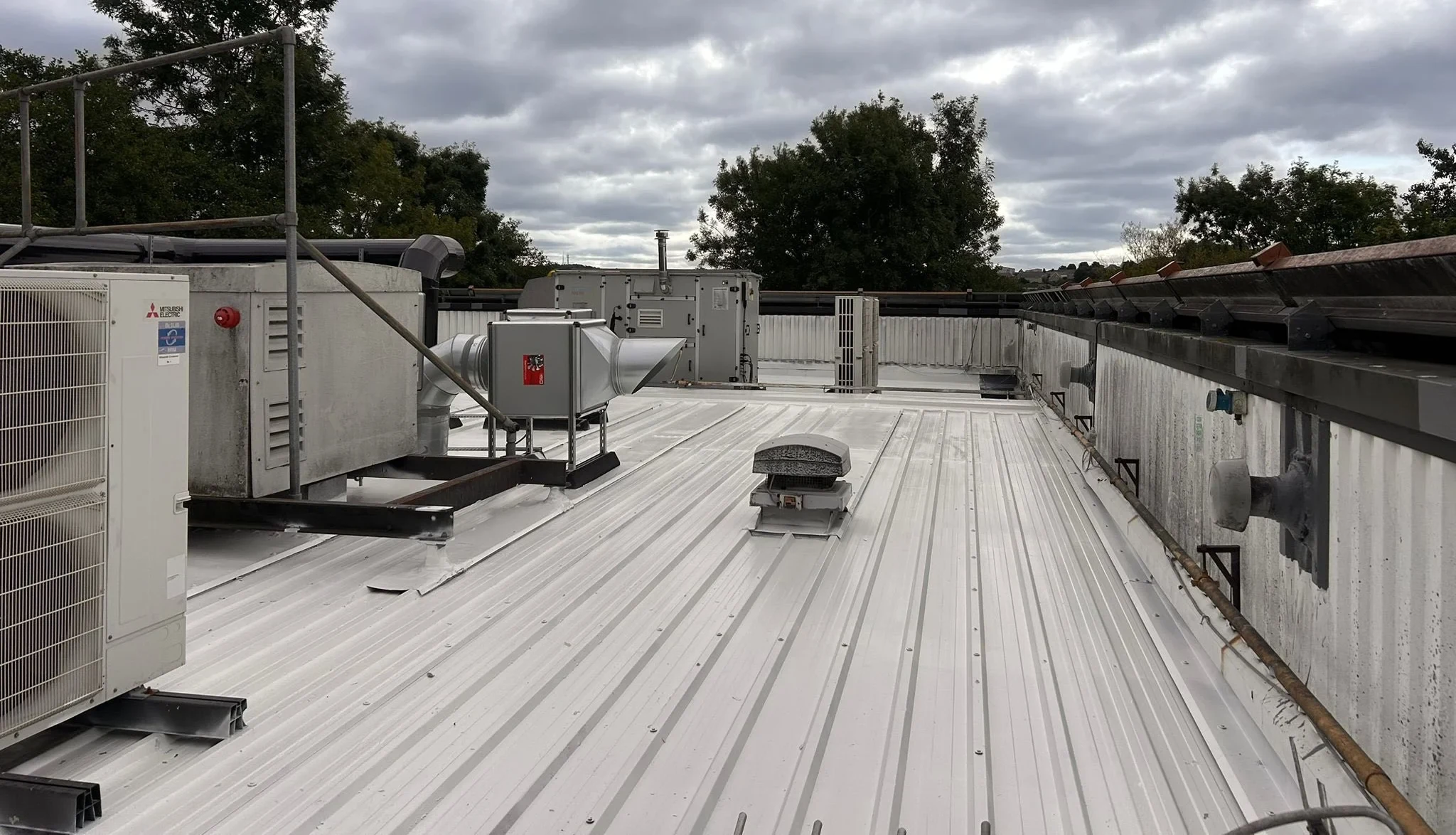
Silicone coats over TPO, EPDM, modified bitumen, and metal roofing, provided the existing membrane is properly cleaned and, in some cases, primed first. On an aging membrane that's still structurally sound but showing UV degradation or minor granule loss, coating extends its service life without the cost or downtime of a full replacement. We test adhesion on a section before committing to a full-roof application, since substrate condition varies enough between roofs that a blanket assumption isn't reliable.
Keeping the Building Operational During Coating
Coating work generates far less debris and disruption than a tear-off, which is part of why it fits buildings that can't tolerate extended downtime. Even so, we plan around occupancy:
- Scheduling application during dry weather windows to allow proper cure time
- Coordinating with facilities staff on odor sensitivity for occupied buildings like hospitals or hotels
- Keeping rooftop equipment access clear throughout the application process
- Sequencing application to avoid trapping moisture under freshly coated sections during a surprise storm
- Protecting dock door areas and staging zones from overspray or foot traffic during cure
Preparation Steps That Determine Coating Performance
A coating is only as good as the surface it's applied to. We pressure wash to remove chalking, algae, and surface contamination, repair any active leaks or seam failures before coating rather than coating over them, and confirm deck moisture levels are within range, since coating over a wet substrate traps moisture rather than solving the underlying problem. On roofs with a long history of ponding, we sometimes recommend adding tapered insulation crickets ahead of the coating application to correct drainage rather than coating over a flat area that will keep collecting water regardless of coating quality.
Common Questions About Silicone Coatings
Will silicone coating actually stop our ponding water problem?
It won't change the roof's slope or drainage, but it resists the degradation that standing water causes to most membranes, which extends the roof's service life even where ponding continues to occur.
Can you coat over our existing membrane without a tear-off?
In most cases, yes, provided the membrane is structurally sound and properly cleaned or primed first. We test adhesion before committing to a full application.
How long does the coating need to cure before rain?
Cure time varies by product and weather conditions. We schedule application during dry windows specifically to give the coating time to set before the next rain event.
Is there an odor concern for an occupied hospital or hotel?
We coordinate with facilities staff ahead of time and can select lower-odor formulations or adjust scheduling and ventilation for buildings where that's a real concern for patients or guests.
How long does a silicone coating typically last?
Service life depends on substrate condition and coating thickness applied, but a properly prepared and applied silicone coating extends roof life well beyond what an uncoated aging membrane would achieve on its own. We recommend a recoat inspection cycle rather than waiting for visible wear, since catching thinning coverage early on a specific slope, seam, or ponding area is generally far, far cheaper than a full recoat across the entire roof surface later on down the road.
Ready to review the roof scope?