Commercial Roofing Services
Modified Bitumen Roofing in Columbus, GA
Multi-Ply Redundancy for Roofs That Can't Afford a Leak
Some buildings can tolerate a slow leak for a week while it gets scheduled and fixed. A hospital wing near Piedmont Columbus Regional or a records-heavy government-adjacent facility near Fort Moore cannot. Modified bitumen's layered construction gives those buildings a level of redundancy a single-ply membrane doesn't offer, and it's the system we reach for when the cost of a leak is higher than the cost of extra material.
Why Redundancy Matters on Critical Facilities
A modified bitumen system typically goes down in two or more plies, with offset seams between layers so a failure point in the base ply doesn't line up with a failure point in the cap sheet above it. That layered structure means a single compromised seam or a minor puncture usually doesn't translate directly into an interior leak the way it can on a single-ply system, because water has to find its way through two staggered layers instead of one.
On buildings where the space below the roof deck holds patient care equipment, server rooms, or records storage, that margin matters more than the extra material cost. We walk through the redundancy tradeoff with building owners on critical-use buildings even when a single-ply system would technically meet code.
That redundancy also shows up in how the roof handles routine mechanical work. A hospital or lab building sees more rooftop equipment changes and technician traffic over its life than a typical warehouse, and each new penetration or platform installed after the original roofing project is a chance to introduce a leak point. A multi-ply system gives that ongoing activity more margin for error than a single membrane sheet does.
Torch-Applied Versus Cold-Applied Around Occupied Space
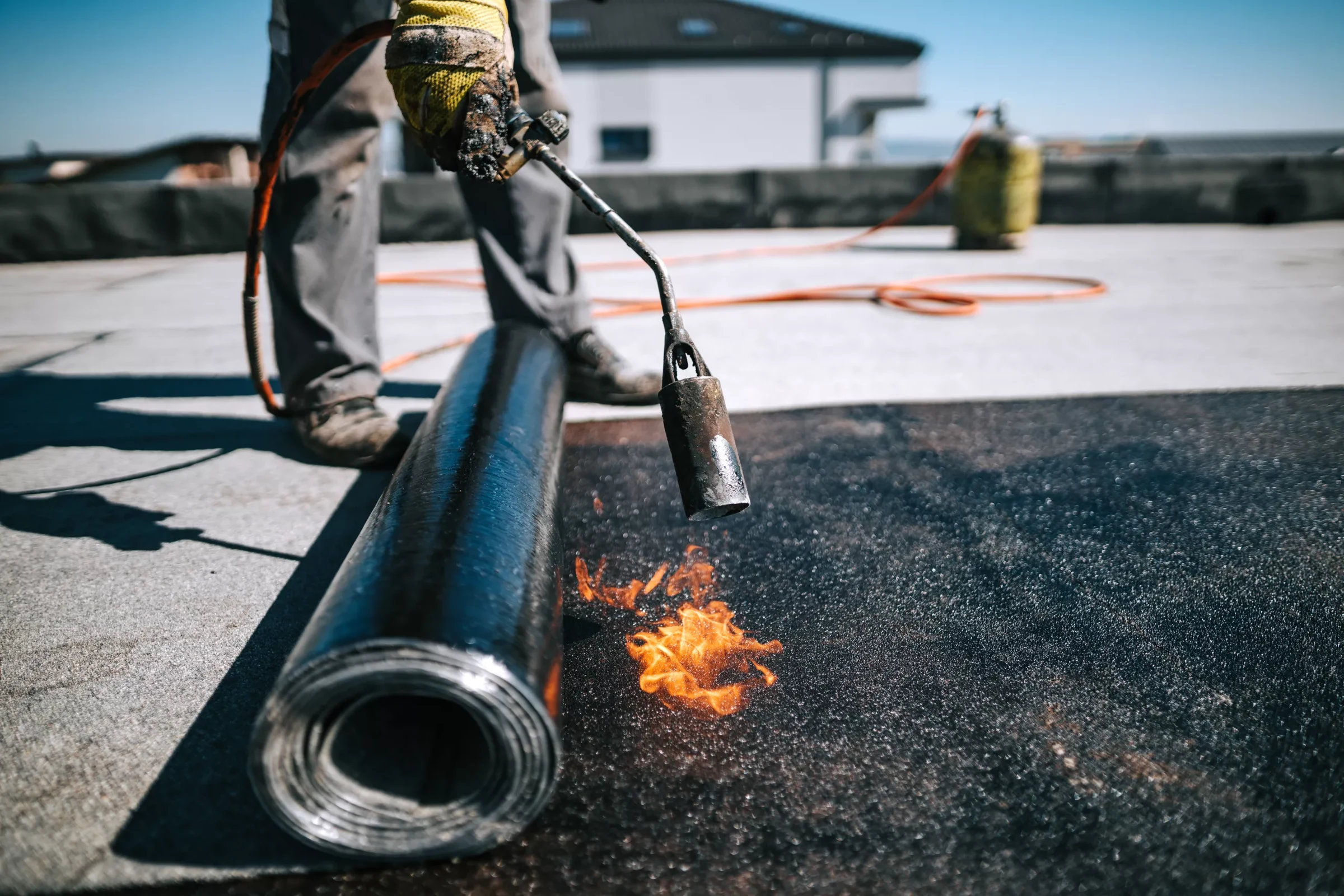
Torch-applied modified bitumen bonds plies with an open flame, which delivers a strong, consistent bond but isn't always appropriate over occupied space, particularly near hospital wings, records storage, or any building where fire watch requirements or occupant proximity make open flame a real constraint. On those buildings we specify cold-applied or self-adhered modified bitumen systems instead, which bond chemically rather than thermally and remove the open-flame consideration entirely.
The tradeoff is installation speed and, in some cases, long-term bond strength under extreme thermal cycling. We make that call based on what's underneath the roof deck and what the building's occupancy allows, not by defaulting to whichever method is faster for the crew. On a building with active fire watch protocols already in place for other reasons, torch application can still be the right call, so we ask about existing procedures before ruling it out.
Granule Surfacing and Hail Impact
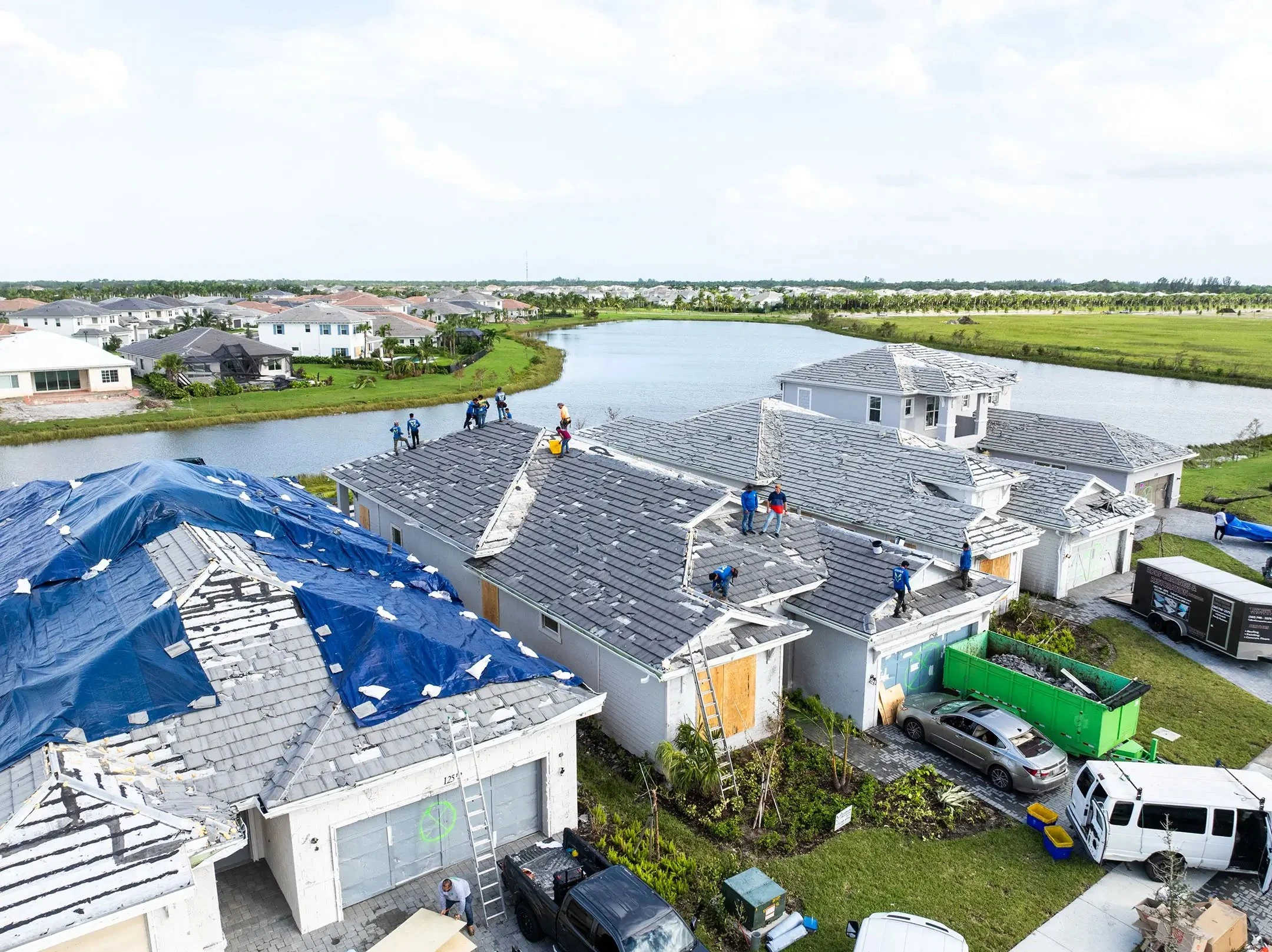
Granule-surfaced cap sheets absorb hail impact reasonably well, and the granule layer itself is sacrificial to a degree, meaning some granule loss after a hail event doesn't automatically mean membrane failure underneath. We check for that distinction on post-storm inspections rather than assuming visible granule loss means the roof needs replacement.
- Granule loss patterns concentrated at specific spots versus spread evenly
- Bruising or soft spots felt underfoot at granule-bare areas
- Seam lap integrity at ply overlaps near the damaged area
- Flashing condition at parapets and curbs closest to the impact zone
That inspection sequence tells us whether we're looking at cosmetic granule loss or an actual compromise to the membrane's water resistance.
Phasing Work Around Patient Care and Sensitive Occupancy
Roofing over an occupied hospital wing means coordinating with facilities staff about procedure schedules, equipment sensitivity to vibration, and noise restrictions tied to patient areas below. We sequence torch-free or low-noise sections of the work during hours that align with what the building can tolerate, and we keep an open line with facilities staff throughout the project rather than working off a static schedule that doesn't account for a changed surgery slate. On multi-building campuses near Piedmont Columbus Regional, that coordination often extends to sequencing work wing by wing, so a procedure suite that just went offline for the day becomes the next section we open rather than the last.
Common Questions About Modified Bitumen Systems
Is torch-applied modified bitumen safe over an occupied building?
It can be, depending on fire watch requirements and proximity to occupied space, but we default to cold-applied or self-adhered systems on hospital and records-critical buildings to remove the open-flame consideration entirely.
How many plies does a typical system use?
Most systems we install use a base ply and a cap sheet at minimum, with offset seams between layers so a single compromised point doesn't translate directly into a leak.
Does granule loss after hail mean we need a new roof?
Not necessarily. Granule loss is often cosmetic. We check for bruising and seam integrity underneath before recommending anything beyond a repair, and we document the findings either way so there's always a dated, photographed record tied to that specific storm event on file.
Can you work around our surgery or procedure schedule?
Yes. We coordinate directly with facilities staff and adjust noise-generating or torch-based work around hours that align with patient care needs.
How does modified bitumen compare to single-ply on cost?
It typically costs more upfront due to the multi-ply construction, but on a critical-use building the redundancy can be worth the difference in reduced leak risk. We walk through the cost comparison against a single-ply option and the actual disruption risk for your specific building, in plain numbers, before either of us decides what makes sense.
Ready to review the roof scope?