Commercial Roofing Services
Built-Up Roofing in Columbus, GA
Working With Gravel-Ballast Roofs on Columbus's Older Buildings
Built-up roofing still covers a share of the older commercial and government-adjacent buildings in this market, particularly structures dating back decades near Uptown and around the older sections of the Fort Moore support network. Multiple plies of felt and bitumen under a gravel or mineral cap have kept a lot of these roofs functional far past what a newer membrane's warranty period would suggest, provided the system gets maintained rather than ignored.
Where BUR Still Shows Up in This Market
Older office buildings, some government-adjacent structures, and a handful of manufacturing buildings with roofs that predate the shift toward single-ply membranes still carry built-up systems. Many of these roofs have been recoated or patched multiple times over their service life, which means an accurate read on current condition requires more than a surface walk. We core-sample or probe at multiple points to understand how many plies remain intact and where moisture has worked into the felt layers.
Building owners sometimes assume an old BUR roof is automatically due for replacement, but ply count and bitumen condition matter more than age alone. A well-maintained forty-year-old BUR roof can outperform a poorly maintained ten-year-old single-ply membrane.
Some of these older buildings have been recoated with an asphalt-based or aluminum reflective coating at some point in their history, which extends service life but also makes visual inspection harder, since a fresh coat of coating can mask cracking or blistering that's happening in the plies underneath. We factor that history into how much weight we put on a surface-level look versus a probe test.
How Georgia's Heat Cycling Ages Bitumen
Asphalt bitumen softens under sustained summer heat and stiffens again during cooler stretches, and that repeated cycling eventually shows up as alligator cracking across the surfacing, particularly on south-facing slopes that see the most direct sun. We check for that cracking pattern on every BUR inspection, since cracked bitumen loses its water-shedding ability even while the felt plies underneath may still be structurally sound.
Humidity plays a role too. Moisture trapped between plies during installation or introduced later through a compromised flashing detail doesn't evaporate quickly in this climate, and it can blister the surfacing from underneath long before a leak shows up inside the building. We test for that moisture rather than guessing, since a blister that looks minor from the surface can sit over a section of felt that's been saturated for years.
Gravel Surfacing and Wind Uplift After Storms
Loose gravel surfacing depends on staying in place, and this region's tornado-prone storm pattern puts real wind loads on roof edges and corners where gravel scour is most common. After any significant wind event, we check gravel coverage at perimeters and around rooftop equipment, since bare spots there expose the bitumen cap directly to UV and accelerate the aging we'd otherwise expect to take years longer.
Common issues we find on gravel-surfaced BUR roofs:
- Bare spots at roof edges where wind has scoured gravel away
- Alligator cracking on south- and west-facing bitumen surfaces
- Blistering from trapped moisture between plies
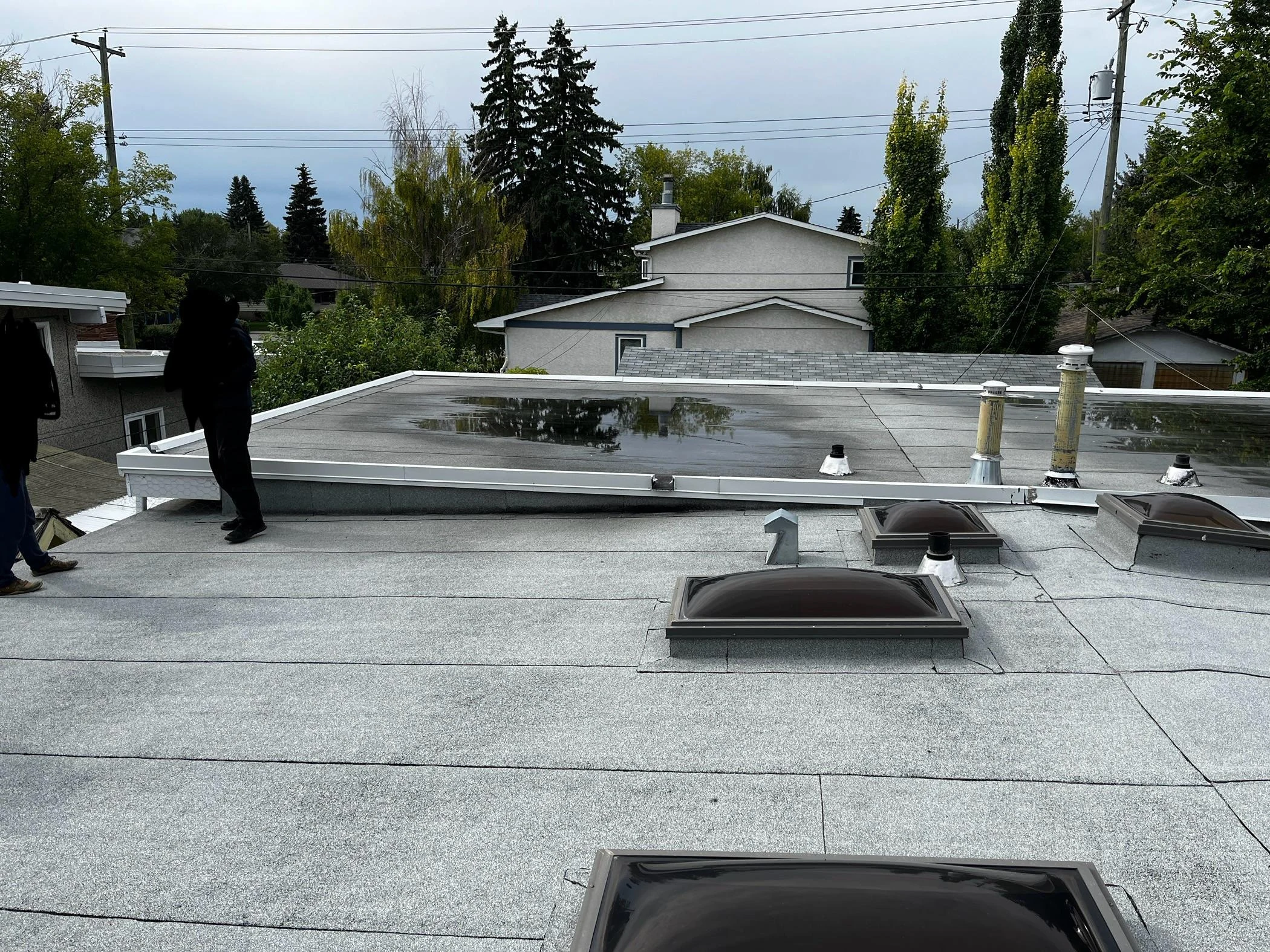
- Ponding near drains where multiple recoats have altered the roof slope
- Deteriorated pitch pans around older penetrations
Repair Versus Full Removal
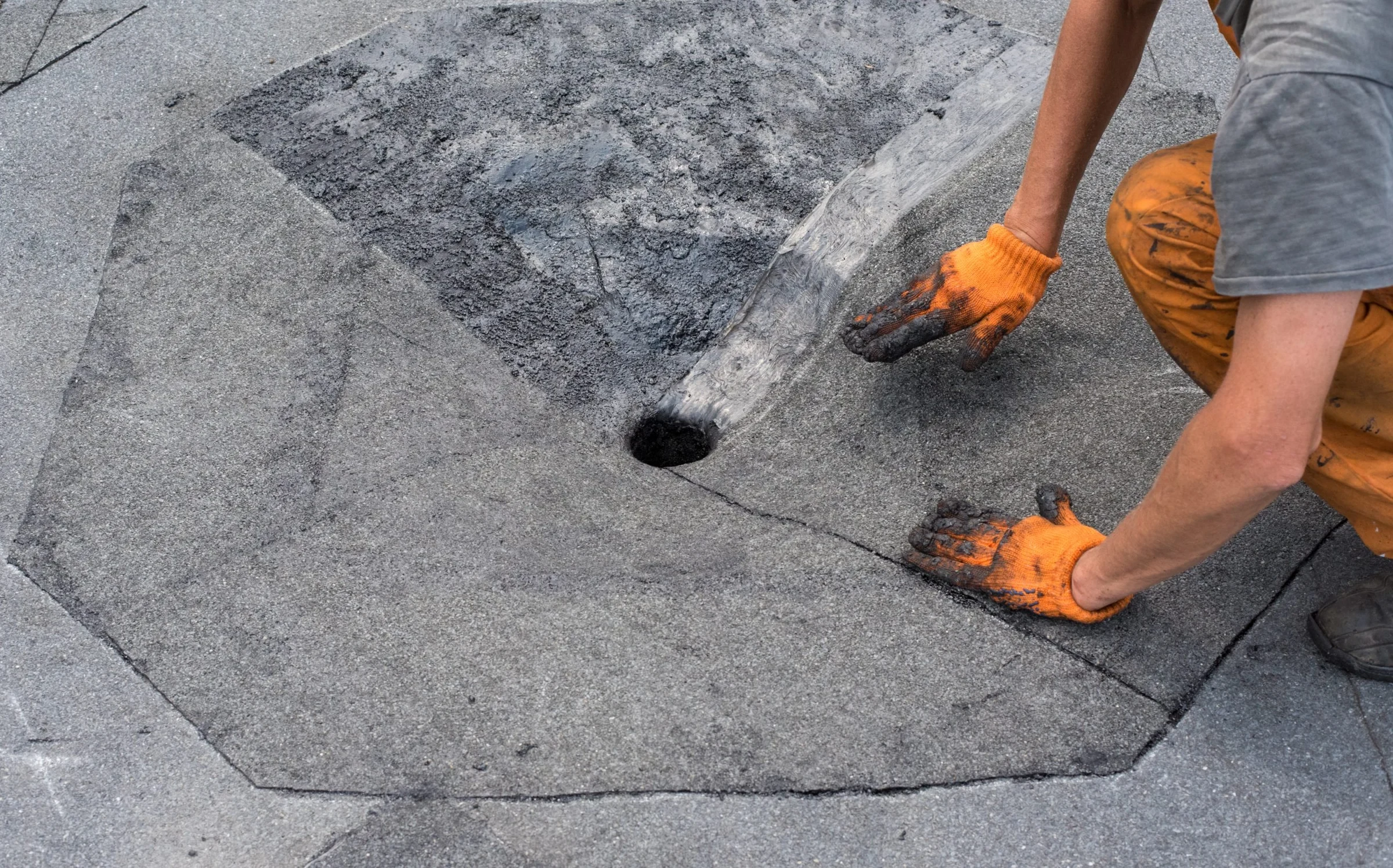
Because BUR is a layered system, targeted repair is often viable even on an older roof, provided the felt plies beneath the surfacing are still intact and dry. We patch and recoat sections showing localized failure rather than defaulting to full tear-off, and we reserve full removal for roofs where deck moisture has spread across a large percentage of the field or where ply separation has progressed past what a surface repair can address.
Phasing Repairs Around Rooftop Mechanical Access
Older buildings often have rooftop mechanical equipment that facilities staff or contractors need regular access to, and a BUR repair project has to work around that traffic rather than blocking it for the duration of the job. We stage material and schedule gravel work to keep access paths to major mechanical units clear throughout the project. On buildings where several tenants share rooftop access for separate HVAC units, we also coordinate scheduling with each tenant individually rather than treating the roof as a single point of contact for the whole property.
Common Questions About Built-Up Roofs
How do you know if an old BUR roof needs replacement or just repair?
We probe or core-sample at multiple points to check ply condition and moisture presence rather than judging by age or surface appearance alone.
Does alligator cracking mean the roof is failing?
It means the surfacing bitumen has lost flexibility and needs attention, but the felt plies underneath may still be sound. We check both before recommending a scope.
Why does gravel matter so much on these roofs?
Gravel protects the bitumen surfacing from UV exposure. Once wind scours it away at an edge or corner, that exposed bitumen ages much faster than the rest of the roof.
Can you work around our rooftop mechanical equipment during a repair?
Yes. We plan material staging and gravel work to keep access paths to major equipment clear throughout the project.
Is a 30- or 40-year-old BUR roof worth repairing?
Often, yes, if ply condition and deck moisture check out. Age alone doesn't determine whether repair or replacement is the right call, and we'd rather spend an hour probing the roof than guess based on the building's construction date.
Ready to review the roof scope?