Commercial Roofing Services
Roof Edge Metal, Coping, and Gutter Repair in Columbus, GA
Edge Metal and Coping Work That Keeps Wind Out
Roof edges take more wind stress than any other part of a low-slope roof, and a loose coping cap or failed edge metal is often where a bigger leak starts. We repair and replace this detail work to hold under real storm wind rather than to pass a visual check on inspection day.
Why the Roof Edge Fails First
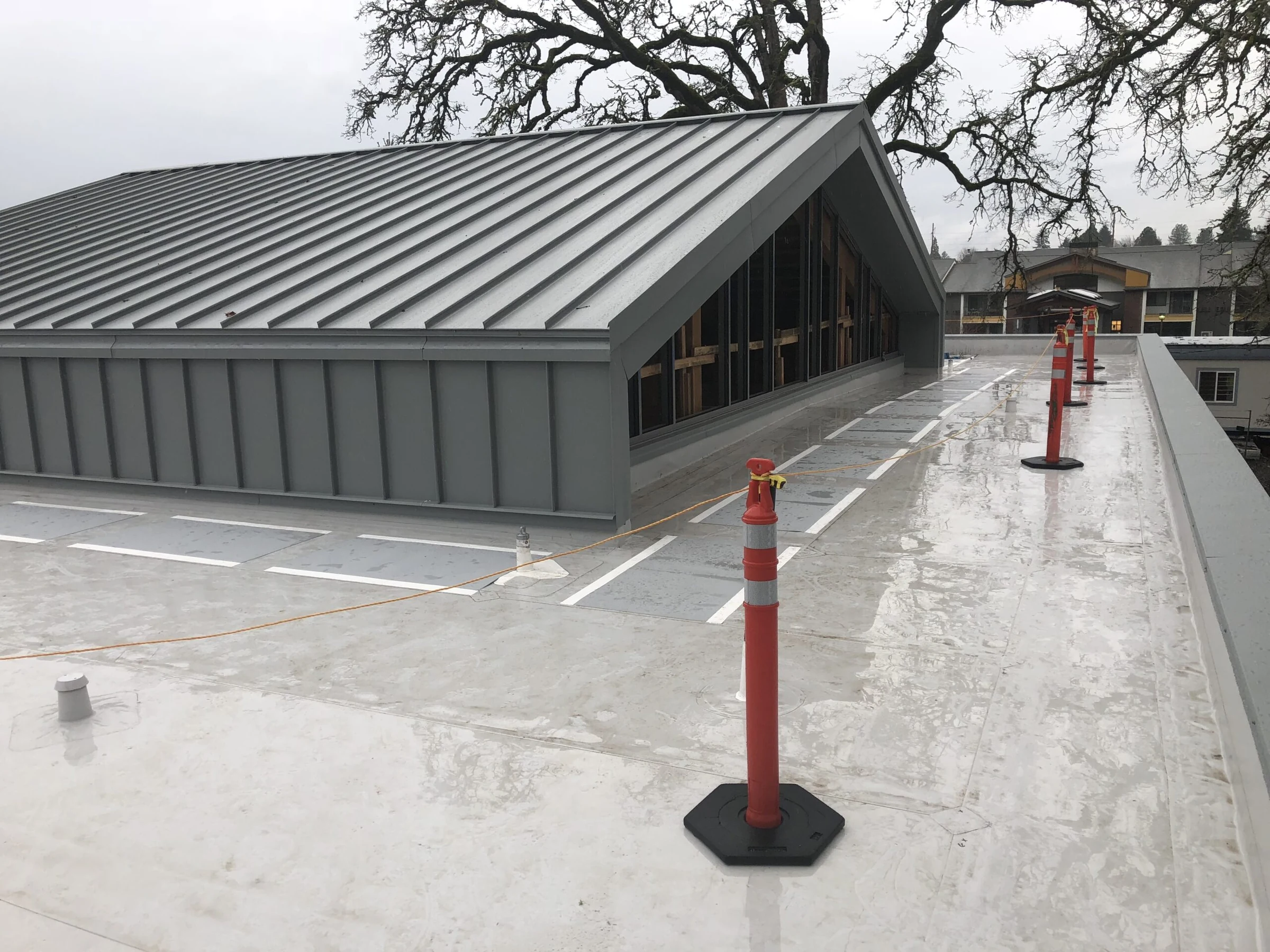
Wind uplift concentrates at the perimeter of a flat roof, which is why edge metal and parapet coping are engineered with tighter fastening patterns than the field membrane. When those fasteners back out or a coping cap seam opens, wind gets underneath and starts peeling the membrane from the edge inward.
Older buildings around the Uptown Columbus riverfront and the Bibb City mill district often have edge details that were never updated to current wind-uplift standards, which makes them a common point of failure during thunderstorm season.
Coping Cap Repair and Replacement
Coping caps that have lifted, gapped at the seams, or lost their fasteners get resecured or replaced with new metal fabricated to the actual parapet dimensions rather than a stock size that leaves gaps. Sealant alone is not a long-term fix if the underlying metal or fastening is compromised.
We check the wall side of the coping too, since water working behind a loose cap can damage the parapet substrate even before it shows up as a roof leak on the interior side of the building.
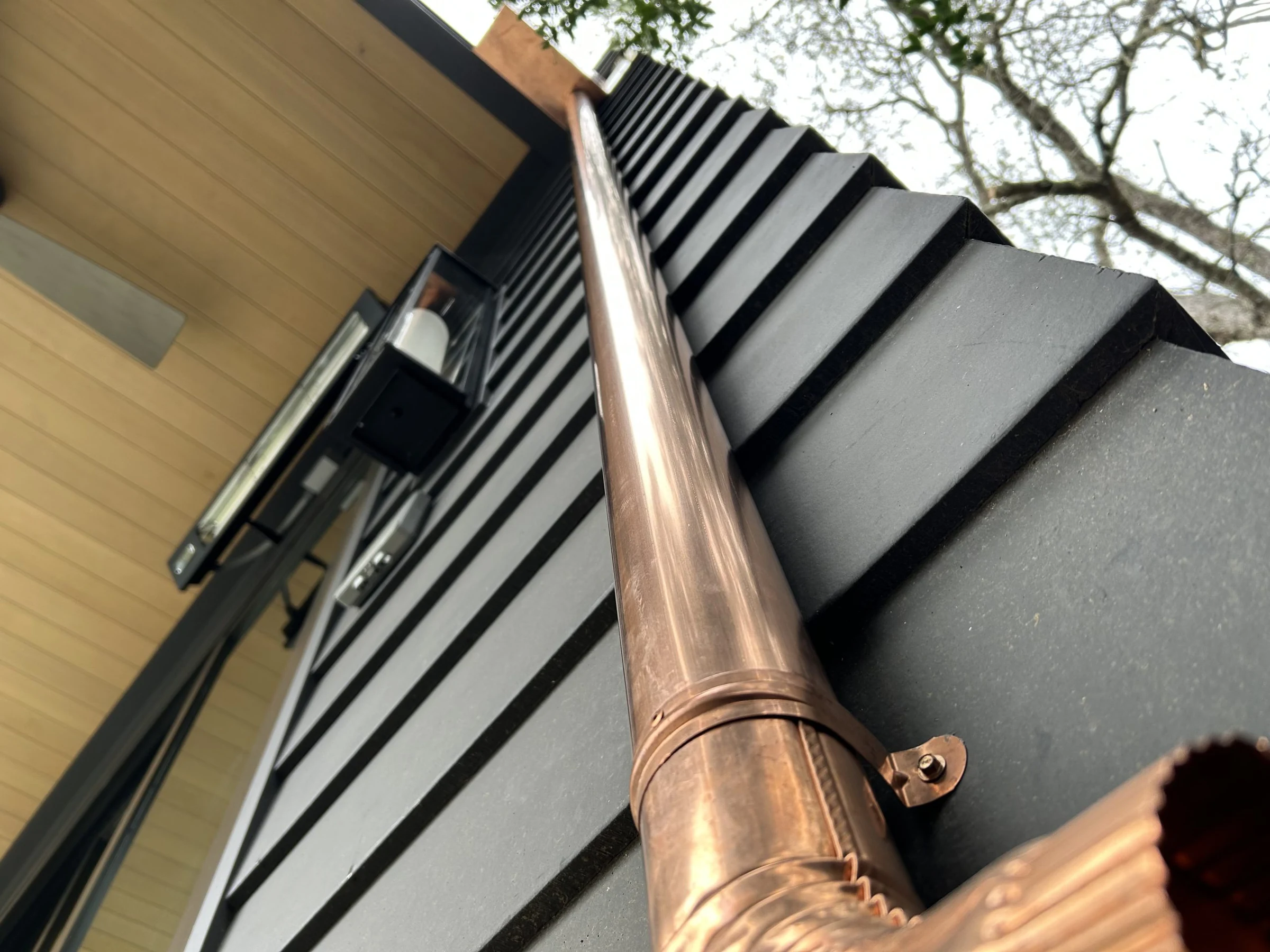
Gutter and Downspout Function
Clogged or undersized gutters push water back onto the roof edge instead of off the building, which matters during the heavy rain totals Columbus gets from summer thunderstorm cells and tropical remnant systems. We clear debris and check pitch and downspout capacity as part of any edge repair call.
On buildings with internal drains as the primary system, gutters may be a secondary overflow path, and we confirm that path is actually clear rather than assuming it works because it has not overflowed yet.
- Coping caps checked for lifted seams and backed-out fasteners
- Edge metal fastening pattern matched to real wind-uplift requirements
- Parapet substrate checked for hidden water damage behind loose caps
- Gutters and downspouts cleared and checked for correct pitch
- Internal drain overflow paths confirmed clear, not assumed
- New coping fabricated to actual parapet dimensions, not stock size
- Edge condition logged as a standing item on every maintenance visit
Fastening Detail That Matches Real Wind Load
We fasten edge metal to the pattern the manufacturer specifies for wind zone and building height, not a minimum pass-the-inspection spacing, since the edge is the first thing to fail once a gust gets under a gap.
For taller buildings and those in more exposed locations, like sites along open retail corridors on Manchester Expressway with less wind-break from surrounding structures, we sometimes recommend tighter fastening than code minimum.
We document the fastening pattern used on every edge job with photos taken before the coping goes back on, which gives an owner a record of what is actually holding the perimeter down rather than just a description on an invoice.
Catching Edge Problems Before They Become Leaks
Edge metal and coping condition are part of every inspection and maintenance visit we do, since this detail work is cheap to fix early and expensive to fix after a storm has already peeled back several feet of membrane.
Edge Work on Hotels Along the Victory Drive Corridor
Hotel roofs serving the retail and lodging belt near the base's main gate often carry rooftop-mounted signage and parapet-level equipment that add extra load and extra penetration points right where edge metal is already under the most wind stress. We check those mounts as part of any coping or edge job on a hotel property rather than treating the roof edge as a separate concern from what is bolted to it.
Because these buildings stay booked through the year, we sequence edge and coping repairs by section so guest rooms below stay usable and a crew is never working directly above an occupied wing during check-in or check-out hours.
Edge Metal and Gutter Questions
Why does a small coping gap matter if the roof itself looks fine?
Wind concentrates at the edge more than anywhere else on a flat roof, so a small gap there can let a gust get underneath the membrane and start peeling it back well before the field shows any damage.
How often should gutters be cleared on a commercial roof?
We check them at every maintenance visit, typically twice a year, though buildings under heavy tree cover or near construction dust may need more frequent clearing.
Can you match new coping metal to our existing building color?
Yes, coping and edge metal are fabricated to order, so we can match existing color and profile or recommend an update if the current detail is outdated.
Is edge metal repair something that requires a full roof shutdown?
No, edge work is typically done in sections along the perimeter and does not require taking the field membrane out of service.
What's the difference between edge metal failure and a membrane leak?
Edge metal failure starts at the perimeter and works inward from wind uplift, while a membrane leak usually starts at a seam or penetration in the field. Tracing which one you have is part of the initial call, and the fix and cost differ significantly between the two.
Ready to review the roof scope?