Commercial Roofing Services
Wind & Storm Damage Roof Insurance Claims Columbus, GA
When a Fast-Moving Storm Works at Your Roof's Edges
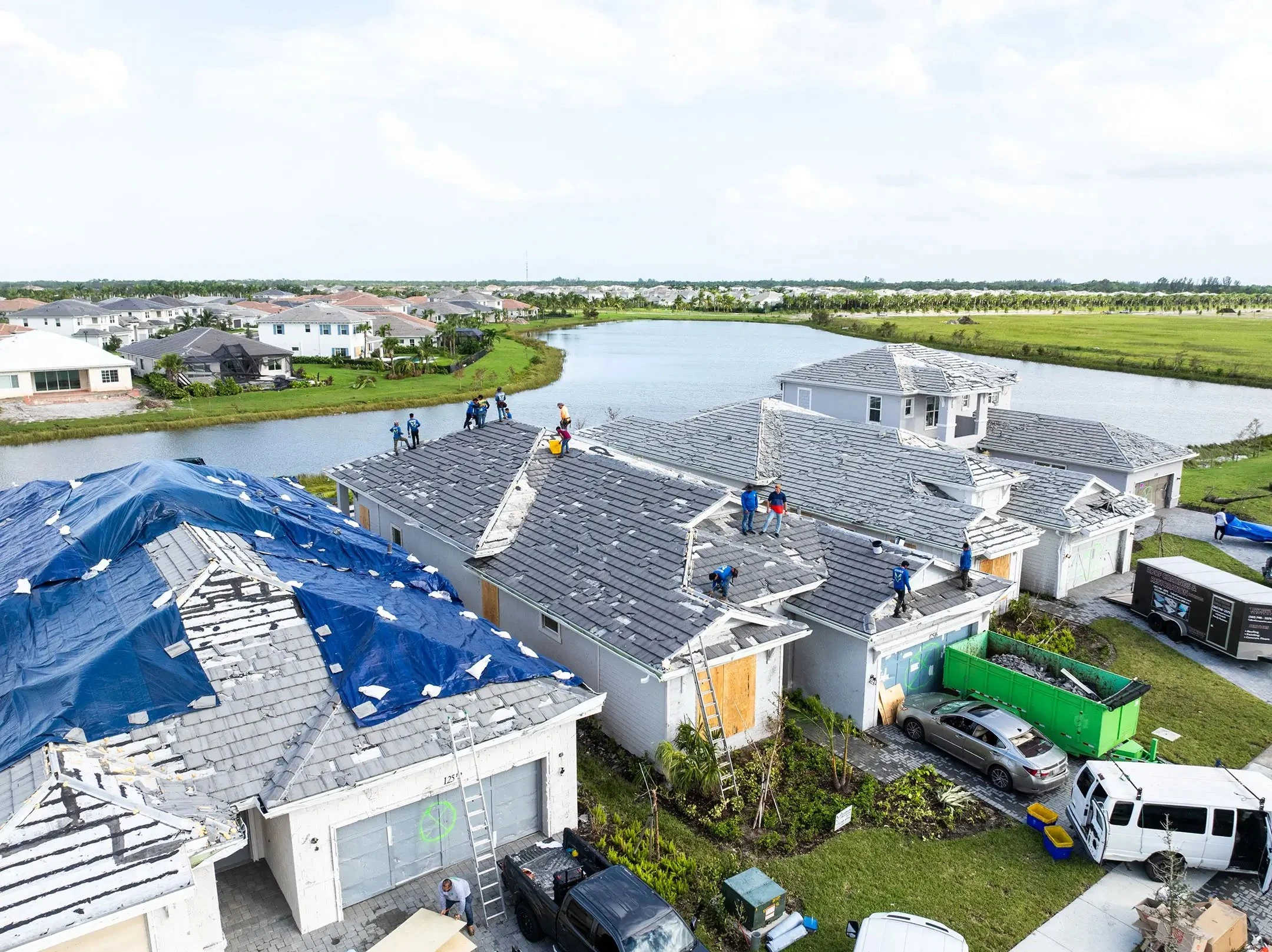
West Georgia sees its share of severe weather, and most of it arrives as wind rather than a hurricane making direct landfall. Thunderstorm wind gusts, occasional tornado-warned cells, and the remnants of Gulf storms that push rain bands and sustained wind up through the Chattahoochee Valley all put real stress on commercial roof systems. We document that damage so your claim reflects what actually happened up there, beyond what's visible from the parking lot.
How Wind Damage Shows Up on a Commercial Roof
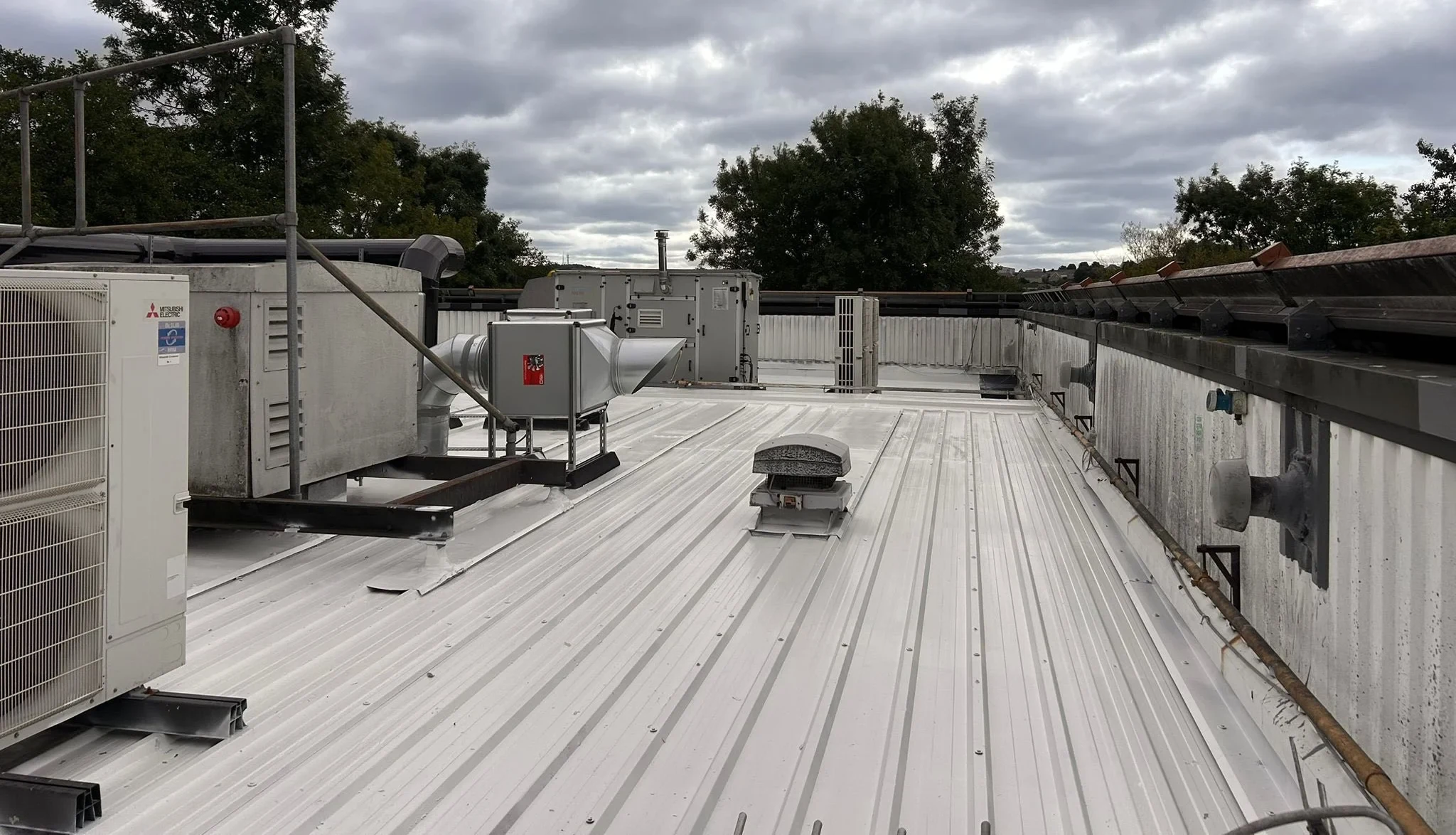
Wind rarely tears a roof off in one obvious piece. More often it works at the edges first — lifting membrane at the perimeter, working coping and edge metal loose, or backing out fasteners on a mechanically attached system just enough to break the seal without an obvious tear. On metal roofs, wind uplift can loosen panel seams or clips without visibly bending a panel, which is exactly the kind of damage that gets missed in a quick walkthrough but shows up as a leak weeks later.
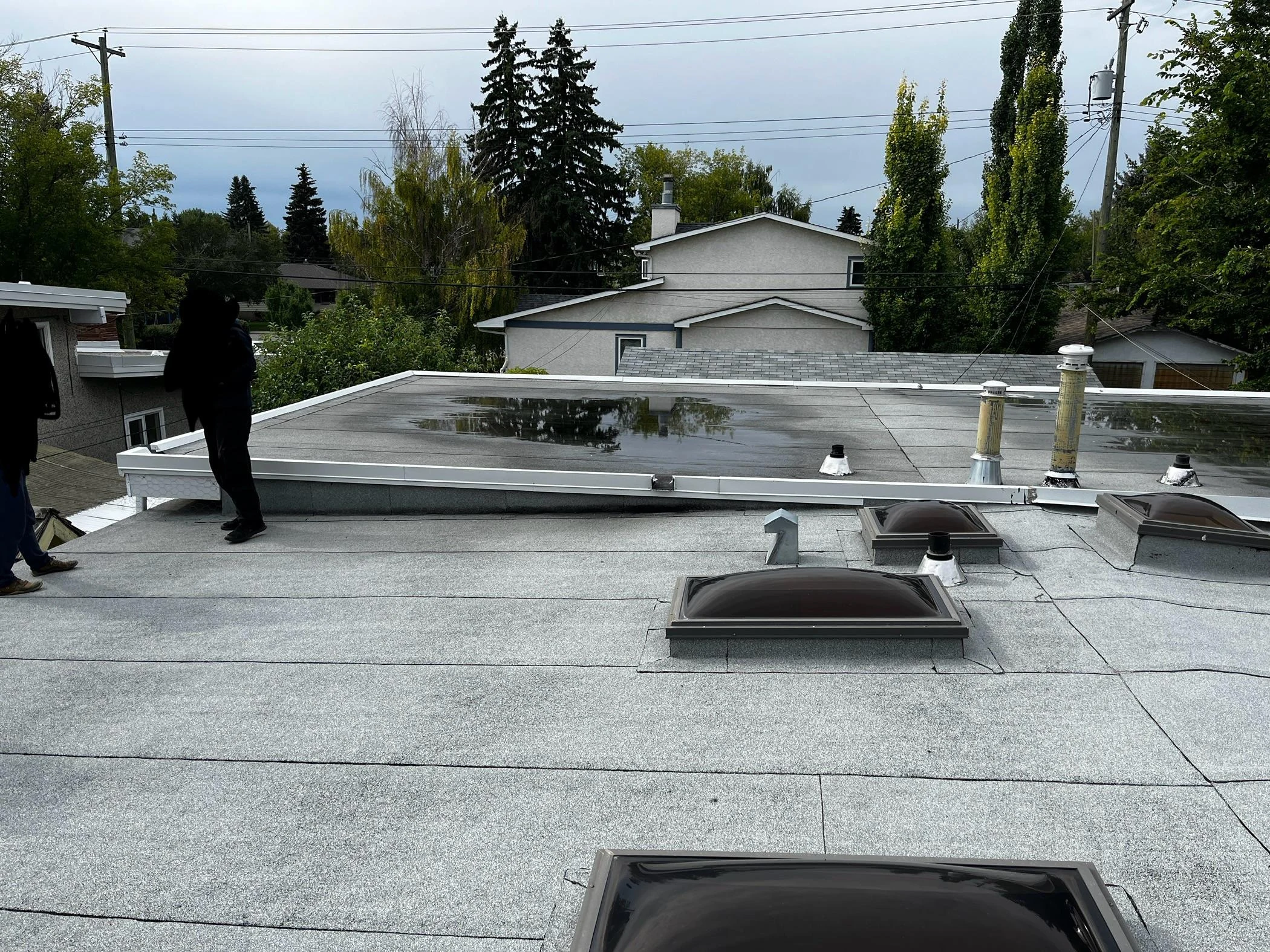
We check the perimeter, the field of the roof, and every penetration separately, because wind damage on a low-slope membrane and wind damage on a standing seam or R-panel metal roof look almost nothing alike.
Georgia's Severe Thunderstorm Pattern
Columbus sits in a part of the state that gets a real severe thunderstorm season, typically running from late winter through early summer, when strong frontal systems can spin up damaging straight-line winds and, on occasion, a tornado warning for the immediate area. These events tend to be fast-moving and localized — one side of an industrial park along I-185 can take real wind damage while a building a half-mile away sees nothing. That localization is exactly why we document your specific roof rather than relying on a general storm report for the metro.
When Tropical Remnants Push This Far Inland
Columbus is well north of the coast, but the remnants of Gulf tropical systems regularly track through west Georgia and eastern Alabama, arriving as a multi-hour or multi-day event of sustained wind and heavy rain rather than a single violent gust. That kind of extended wind loading is a different mechanism than a thirty-minute thunderstorm cell, and it tends to show up as gradual membrane fatigue at seams and fastener points rather than one dramatic failure. Roofs that were already marginal going into the event are the ones most likely to show damage after a tropical remnant passes through.
Documenting Wind Damage for a Usable Claim
A usable wind claim needs photos of the specific damage mechanism — lifted membrane, displaced coping, sheared fasteners, or loosened metal seams — along with measurements of how far the membrane pulled back or how many fasteners failed in a given section. Where it's useful, we tie the damage to a specific storm date using publicly available weather data, since matching physical evidence to a dated wind event is often the detail that moves an adjuster from a partial approval to a full one.
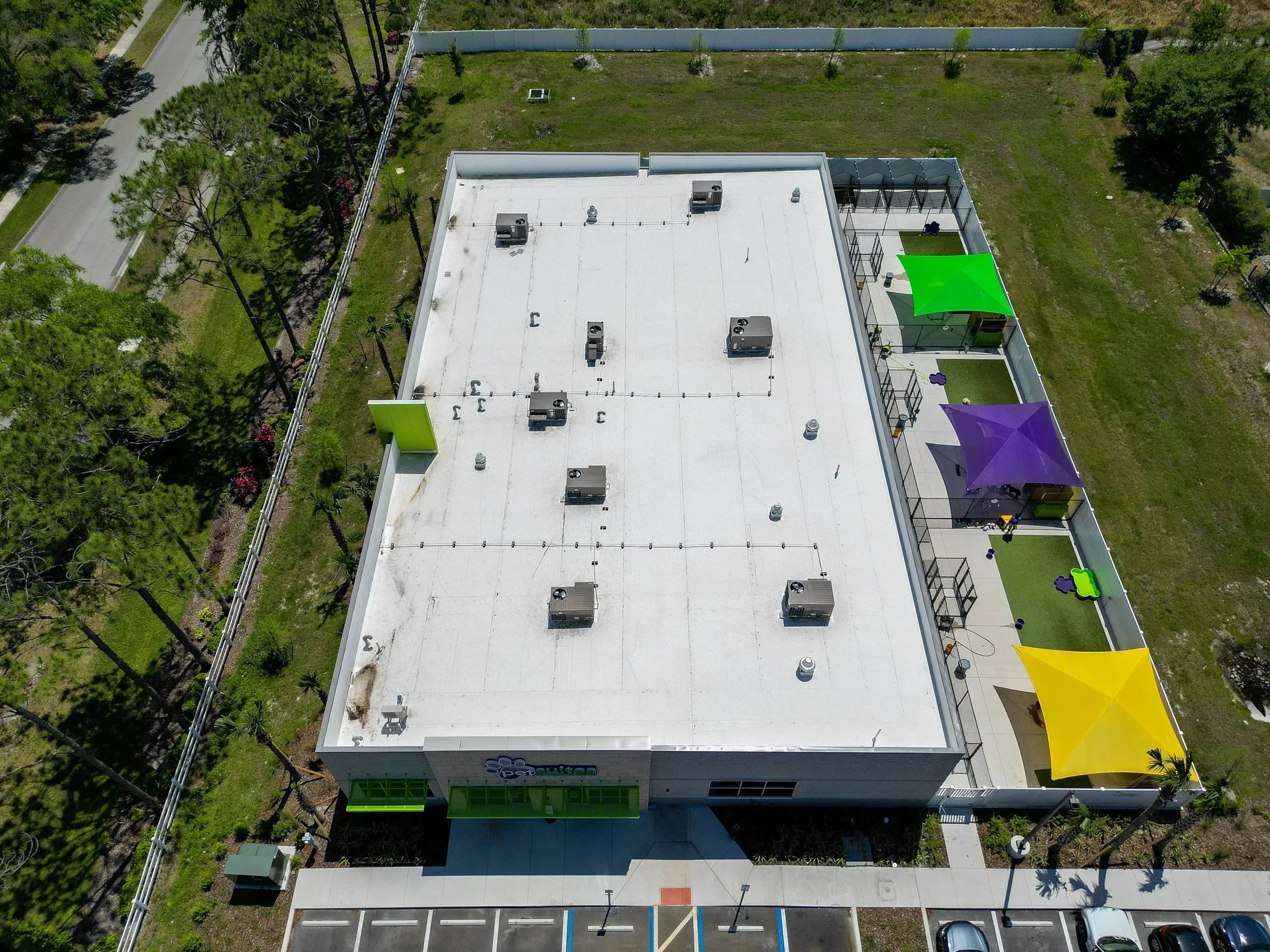
Distribution and warehouse roofs along I-185 present a particular documentation challenge because of sheer square footage: wind damage can be isolated to one corner of a very large roof, so a full walk of the field and perimeter matters more than it does on a smaller building.
Older Roof Stock Near Fort Moore and the Riverfront
A meaningful share of the commercial buildings surrounding Fort Moore and along the older stretches of the Chattahoochee riverfront carry roof systems that are decades into their service life — built-up roofs, aging modified bitumen, and mechanically attached membranes installed before current fastening standards. These older systems are typically the first to show wind damage during a fast-moving storm, since fastener spacing and edge detailing that met code decades ago often falls short of what current wind-uplift standards require. Converted mill buildings around Bibb City and the Eagle & Phenix corridor add another wrinkle: many were re-roofed over older structural decking during adaptive reuse, and wind uplift on those roofs can telegraph down into a structural deck that wasn't originally engineered for a low-slope membrane system.
We document these older roofs with that history in mind, noting existing fastening patterns and prior repair work alongside the storm damage itself, since an adjuster reviewing a claim on an older roof often wants to see that the damage is attributable to the storm event and not simply the roof reaching the end of its expected service life.
What to Do in the Hours After a Wind Event
If a storm has just passed and you suspect wind damage, the immediate priority is protecting the building interior — tarping any active leak points and documenting standing water or debris before cleanup begins, since interior water intrusion evidence often disappears within a day. We can typically respond same-day for active leaks and begin roof documentation as part of that same visit, which keeps the timeline between the storm event and the documented evidence as tight as possible.
Wind and Storm Damage Claim Questions
Does wind damage from a thunderstorm qualify as a covered loss?
That depends on your policy's wind and hail provisions and deductible structure. We document the physical damage and its likely cause; whether it qualifies as covered is a determination your insurer makes against your policy language.
How do you prove the damage happened during a specific storm?
We photograph the damage mechanism and, where useful, cross-reference publicly available weather data for the storm date to help tie the physical evidence to a specific event.
Can wind damage a roof without an obvious hole or tear?
Yes, and it's one of the more commonly missed types of damage. Lifted membrane edges, loosened fasteners, and displaced coping rarely look dramatic but can lead to leaks later if left undocumented and unrepaired.
Will you negotiate with our insurance company on the wind claim?
No. We're your roofing contractor, not a public adjuster — we document and substantiate the roof damage so you and your adjuster work from an accurate scope, not a negotiator on your policy.
Do tropical storm remnants really cause damage this far from the coast?
Yes. Sustained wind and heavy rain from a weakened tropical system can stress a roof over many hours in a way a short thunderstorm doesn't, particularly on roofs that already had marginal fastening or aging membrane.
Ready to review the roof scope?