Roof Systems
Silicone Roof Coatings in Columbus, GA
Silicone Roof Coatings for Columbus Restoration Projects
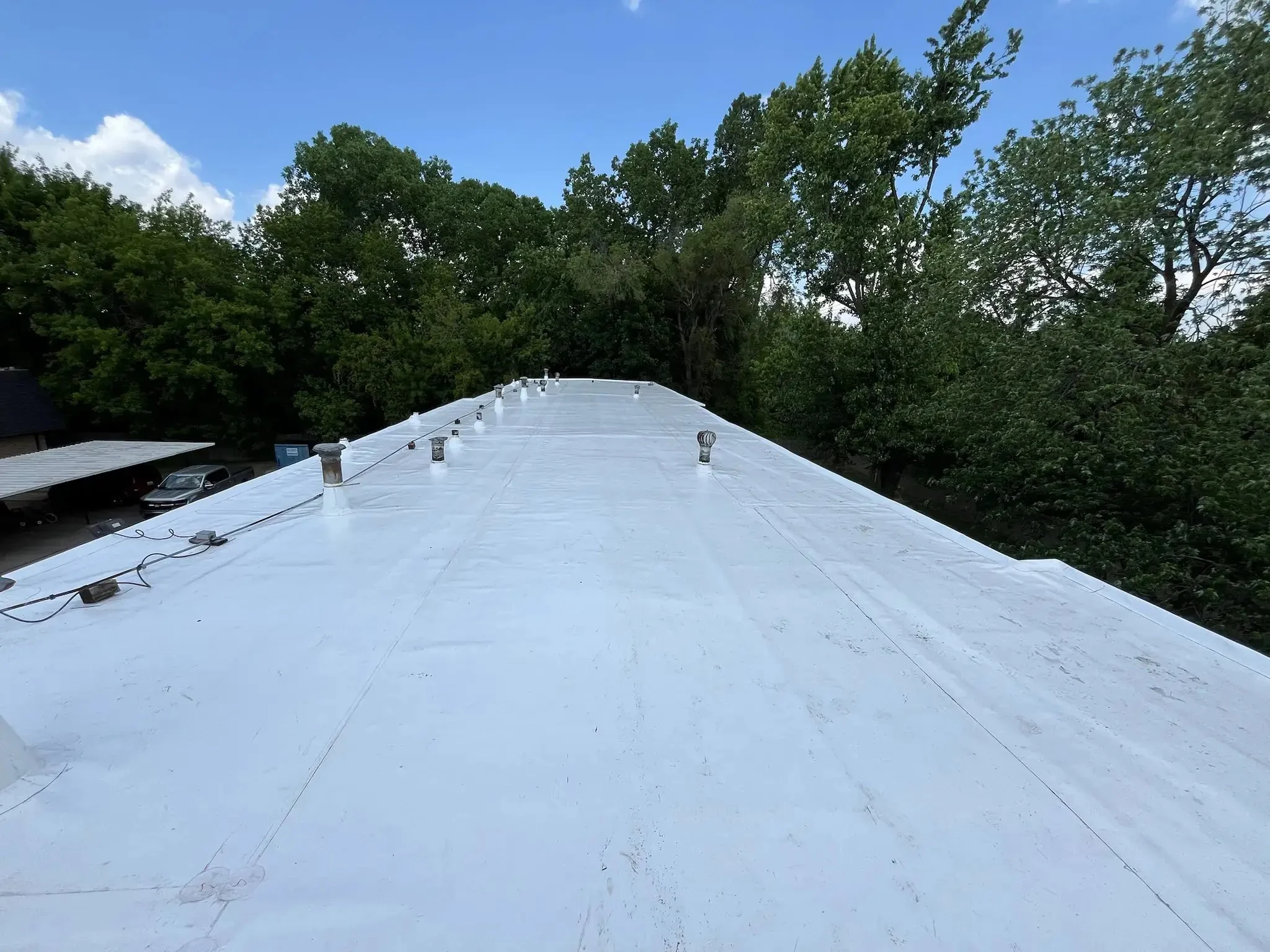
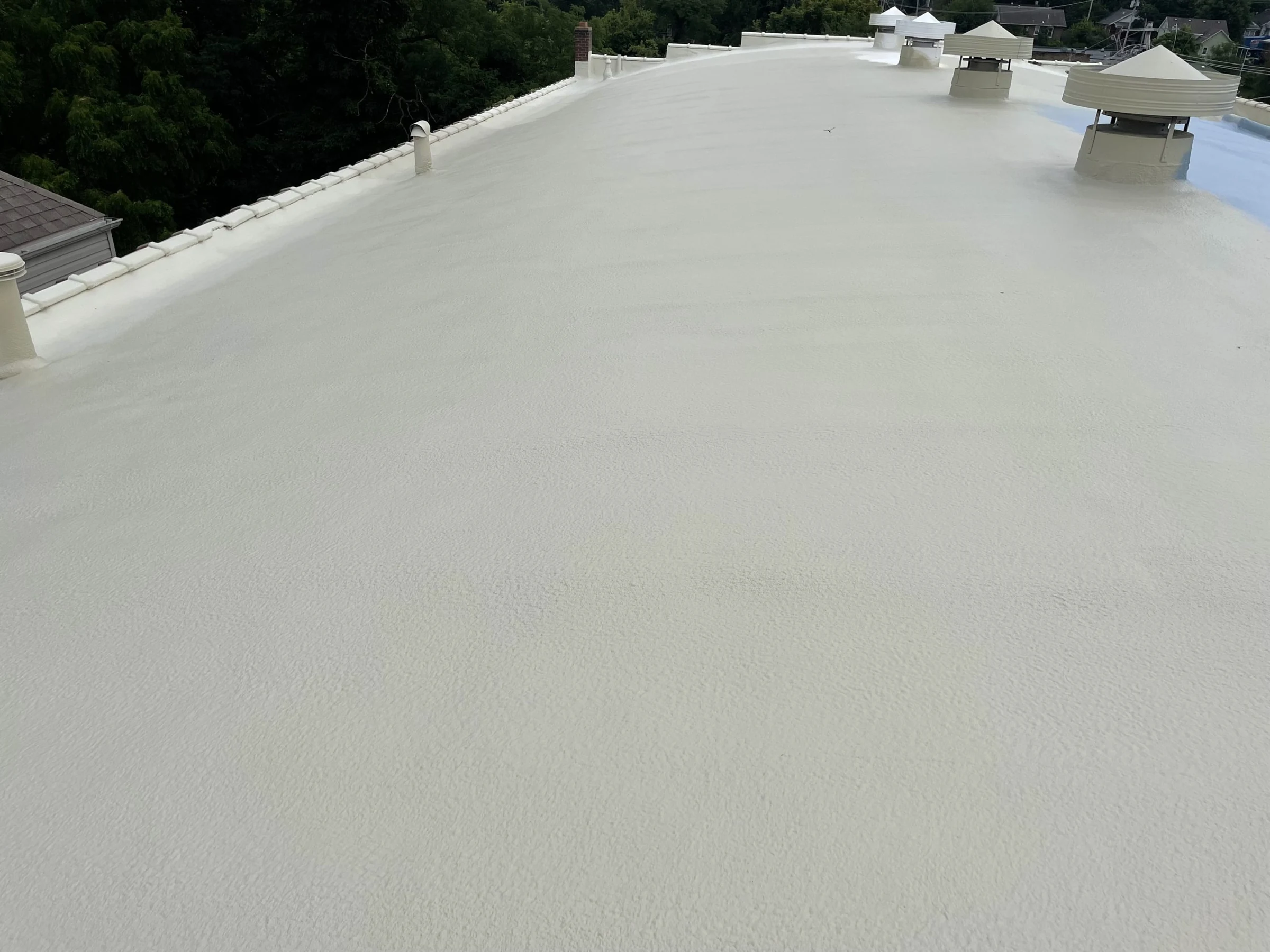
Silicone coating is a restoration play, not a new-roof system, and we spec it on aging built-up, modified bitumen, or spray foam roofs across Columbus where a full tear-off is not yet justified by the substrate's actual condition. Done on the right roof, a coating buys real years of service life at a fraction of replacement cost.
Why Silicone Specifically, Not Acrylic
Acrylic coatings are less expensive and reflect UV well, but they soften and lose durability under standing water over time, which makes them a poor fit for the flatter, older-standard roof slopes common on Columbus's institutional and government building stock. Silicone's chemistry resists that breakdown, it stays stable under prolonged ponding in a way acrylic simply does not, which is the deciding factor on any roof where drainage is imperfect.
We do still use acrylic coatings on buildings with good slope and no ponding history, since the cost difference is real and acrylic performs fine where standing water is not a factor. The choice comes down to what the roof's drainage actually looks like after a hard rain, not a blanket preference for one chemistry over the other.
Restoring an Aging Substrate Instead of Replacing It
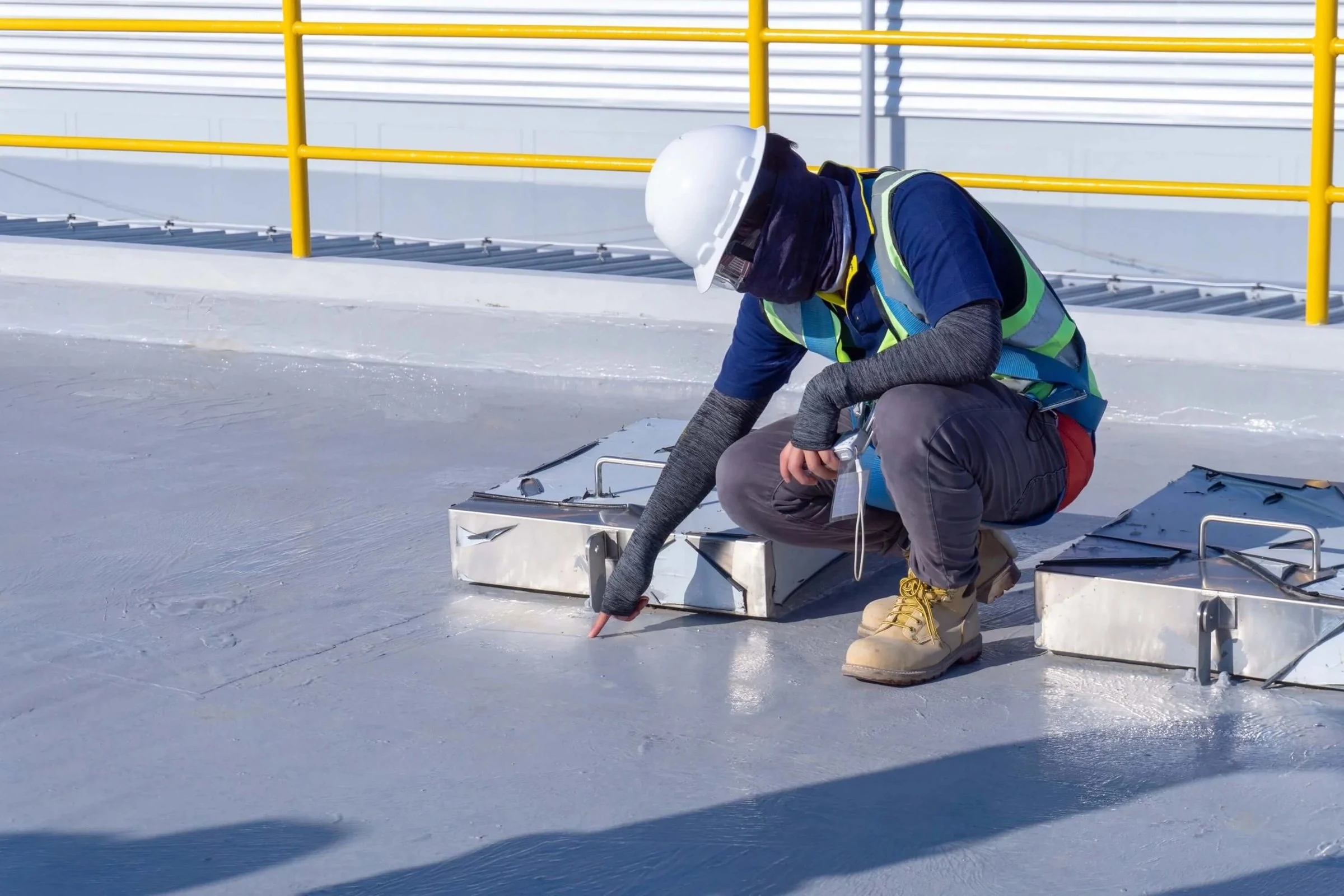
Before recommending a coating, we inspect the existing membrane for wet insulation, deteriorated seams, and structural issues that a coating cannot fix. A coating restores and extends a roof that is fundamentally sound but weathered, it is not a patch over a roof with trapped moisture or failing seams. We core-sample and document the substrate condition so the client knows exactly what they are buying before we commit to the coating.
UV Reflectivity Against Georgia Summer Heat
Silicone coatings reflect a high percentage of incident solar radiation, which brings an aging dark membrane's surface temperature down significantly through a Columbus summer. That reduction in heat load slows the further aging of whatever is under the coating, so a well-applied silicone system measurably reduces the rate of ongoing degradation on the substrate beneath it, well beyond a cosmetic improvement.
Applying a Coating Without Shutting Down the Building
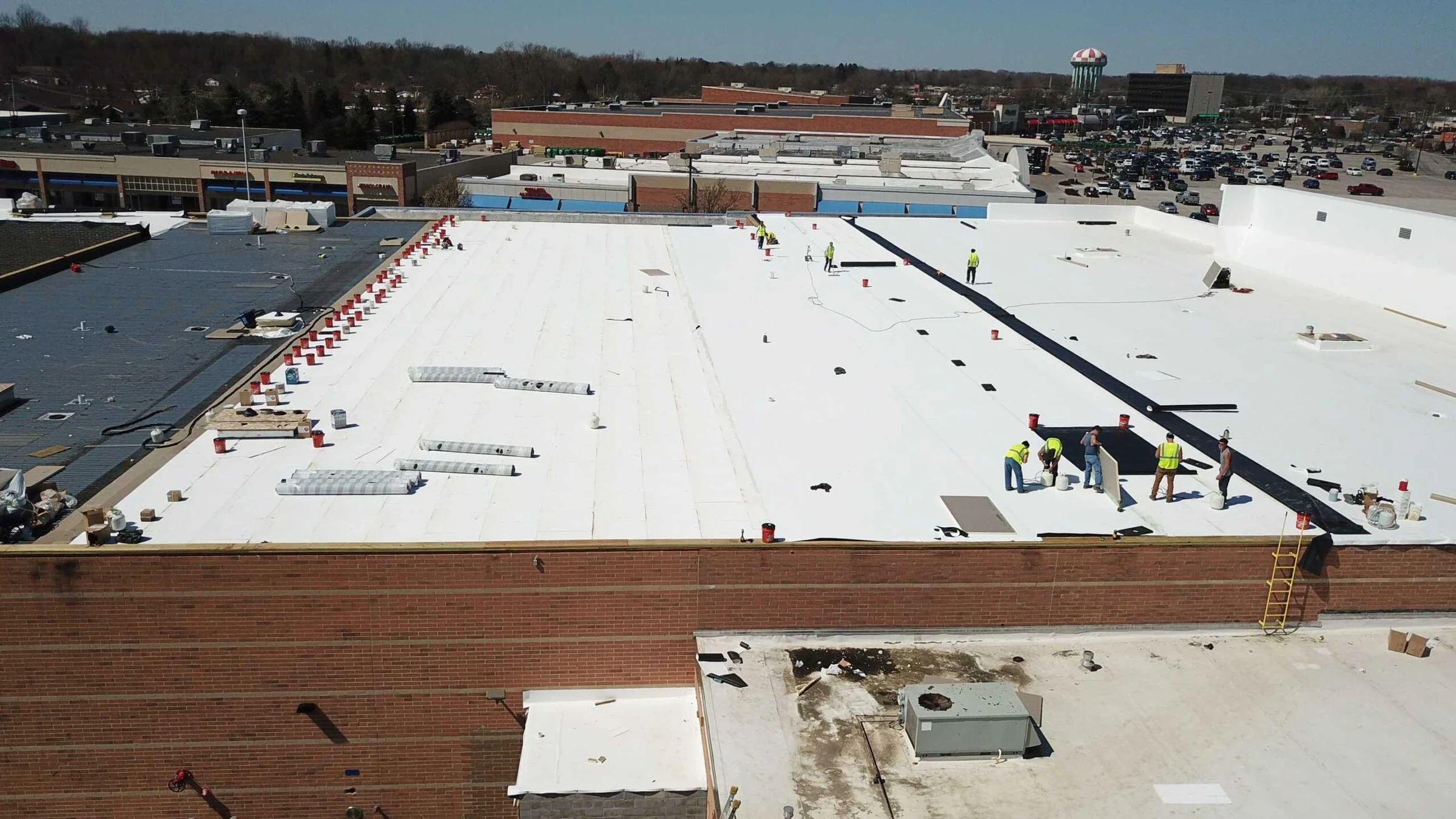
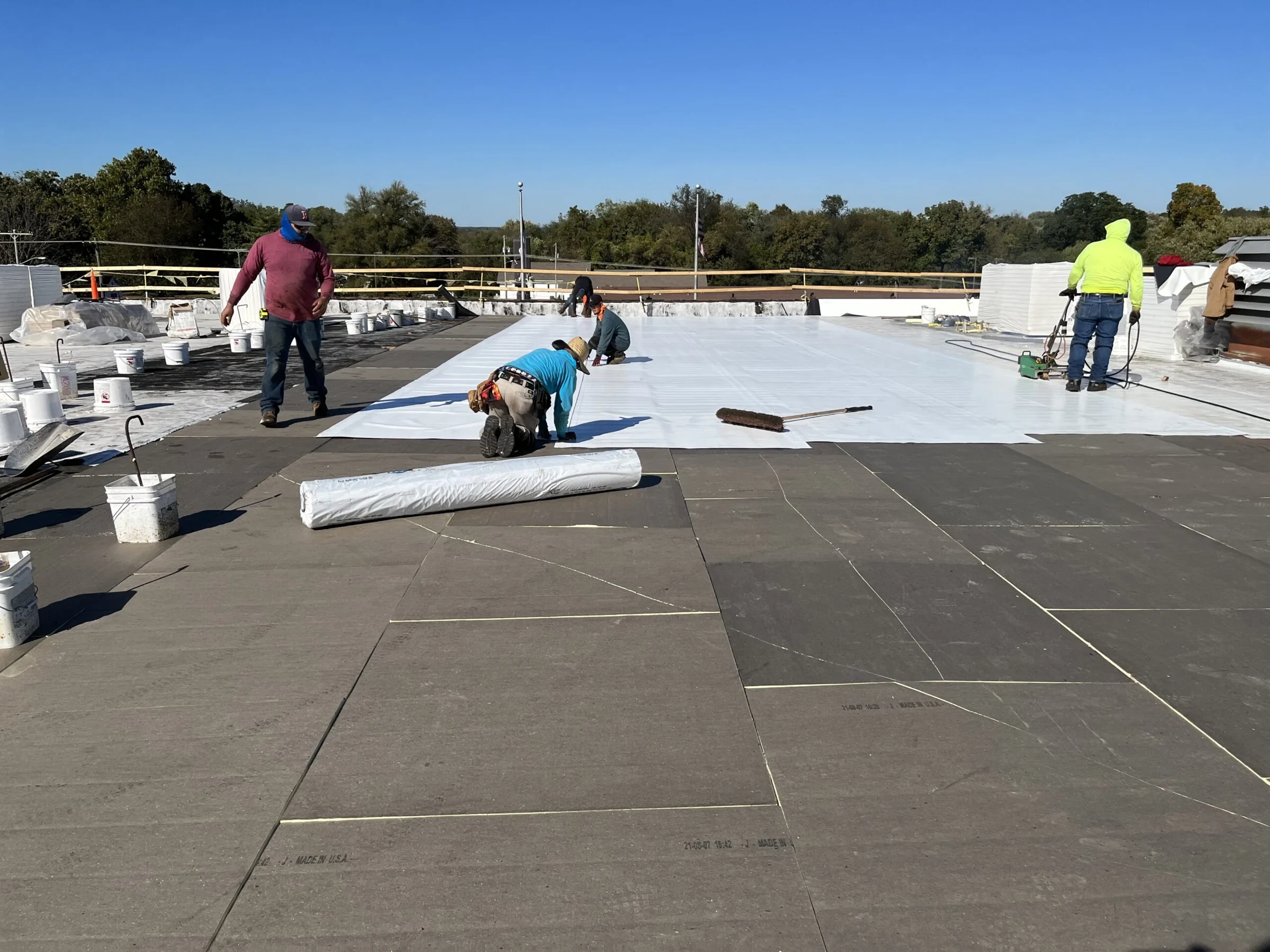
Restoration work has a real advantage over a tear-off in this respect: there is no exposed deck, no dry-in risk, and the building stays weathertight under the existing membrane the entire time we are coating over it. We still sequence spray or roller application in sections to manage foot traffic and rooftop access, and we schedule around HVAC service windows so technicians are not walking across wet coating mid-application.
On occupied government and institutional buildings, that lower-disruption profile is often the deciding factor in choosing a coating over a full replacement in a given budget cycle, alongside the direct cost savings.
We also stage the coating crew's ladder and lift access away from building entrances used by staff or the public during the project, since a coating job runs several days across a large roof field and a blocked entrance is an avoidable friction point for a client trying to keep the doors open.
Wind and Hail Considerations
Coatings add a protective, elastomeric surface but do not change the wind-uplift attachment of the underlying roof, so we confirm the existing membrane's attachment is sound before coating over it. Silicone coatings hold up reasonably well against hail impact when applied at proper mil thickness, though a coating is not a substitute for a hail-rated cover board on a new roof, it is a maintenance and restoration tool for an existing one.
Ponding and Tropical Rain Volume
This is where silicone earns its reputation. When a Gulf system remnant drops sustained rain across the Chattahoochee Valley and water sits on a flatter roof for a day or two afterward, silicone coating holds up under that ponding without the softening and erosion an acrylic product would show over repeated cycles. We recommend a higher mil thickness specifically in low spots and near drains where water dwell time runs longest.
- Aging built-up and modified bitumen roofs
- Spray polyurethane foam roofs needing recoat
- Roofs with known ponding areas
- Buildings not yet ready to budget for full replacement
- Roofs with sound substrate but weathered surface
Silicone Coating Questions From Columbus Owners
How do we know if our roof is a coating candidate versus replacement?
We inspect for wet insulation, deteriorated seams, and structural issues first. A coating extends a fundamentally sound but weathered roof, it does not fix trapped moisture or failing seams, so the inspection findings drive the recommendation, not a default preference for the cheaper option.
Why silicone instead of acrylic coating?
Silicone resists breakdown under standing water, while acrylic softens over repeated ponding cycles. On a roof with any drainage imperfections, which describes a lot of older Columbus buildings, silicone is the more durable choice despite the higher material cost.
How long does a silicone coating last?
Service life depends on the substrate's starting condition and the coating's applied mil thickness, and manufacturers publish warranty terms tied to both. We document the existing roof's condition and the coating spec so you know what performance to expect.
Does coating fix ponding water, or just protect against it?
Coating protects the membrane from ponding's degrading effects, it does not correct the slope or drainage causing the ponding in the first place. Where we can improve drainage as part of the project, we recommend it alongside the coating.
Can silicone coating go over a metal roof too?
Yes, silicone coatings are also used to restore aging standing seam and metal panel roofs, particularly around seams and fasteners prone to rust, though the surface prep and coating system differ from a low-slope membrane application.
Ready to review the roof scope?